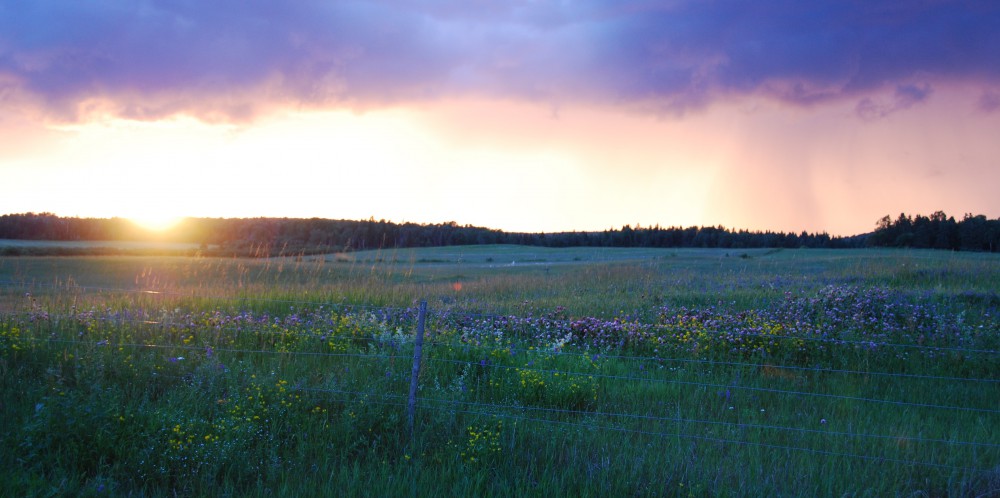
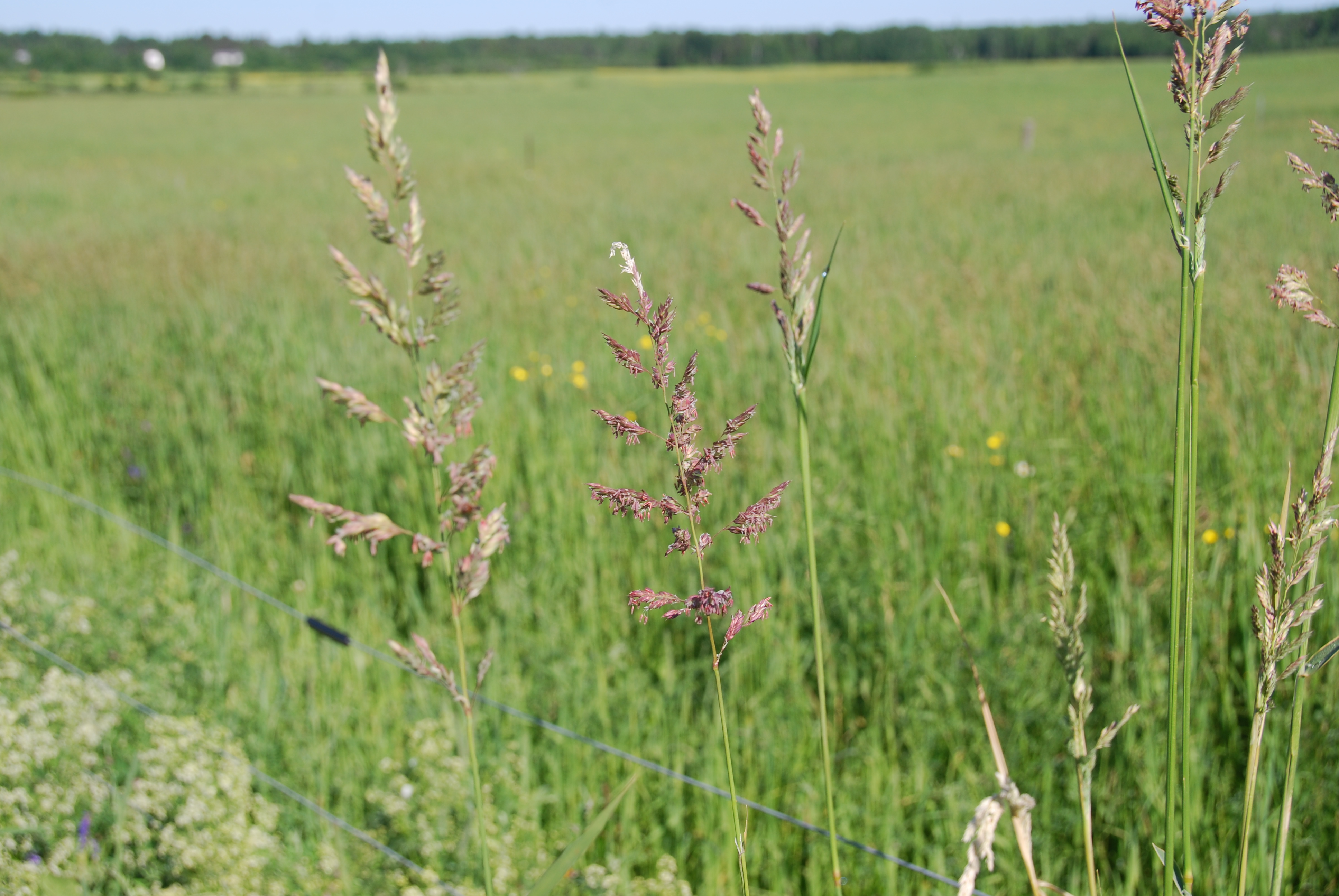
Red canary grass flowers along a fence line.
Here’s a tribute to the small and inconsequential, and further proof that beauty often lies, overlooked or unnoticed, in everyday places.
“For all flesh is as grass,” Peter wrote in the New Testament, “and all the glory of man as the flower of grass.” The apostle was arguing our human works are ultimately as ephemeral as grass — the plant that “withereth, and the flower thereof falleth away.” (King James Version.)
It’s true that in floral terms, grass is not demonstrative. It typically does not produce eye-catching petals in rich colours, pump out intoxicating scents, or engage in extravagant and continuous flowering. Even before people began manipulating the flowering plants to enhance their aesthetics, flowers had an evolutionary investment in being showy and noticeable, using bright colours and aromatic fragrances to attract the insects and birds that ensured pollination.
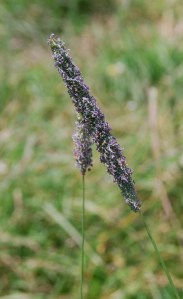 Because the vast majority of grasses are wind-pollinated, they lack this need for dramatic colours and striking aromas. Yet their tiny florets still put on a show, if on a more delicate and ephemeral scale. The cool-season perennial grass, timothy (pictured on the left) blooms on our farm in early July. For just a day or two, the fields of exquisite mauve make a breathtaking sight on misty mornings. (Next year I’ll try to get a photo that does justice to the sight.)
Why don’t you see the same thing on your lawn? Frequent mowing keeps lawn grasses in a green, vegetative state, and helps prevent flowering. Shorter lawn species also feature smaller, more subtle flowering structures, so it’s tough to notice the blooms as you stride to work, or jog through the park. But if you’re lucky enough to pass a field of tall grass, hay, or prairie during your daily routine, keep your eyes open as the grasses “head out” in early summer. It’s a temporary and subtle glory, to be sure, but a glorious sight, nevertheless.
 Empire of grass