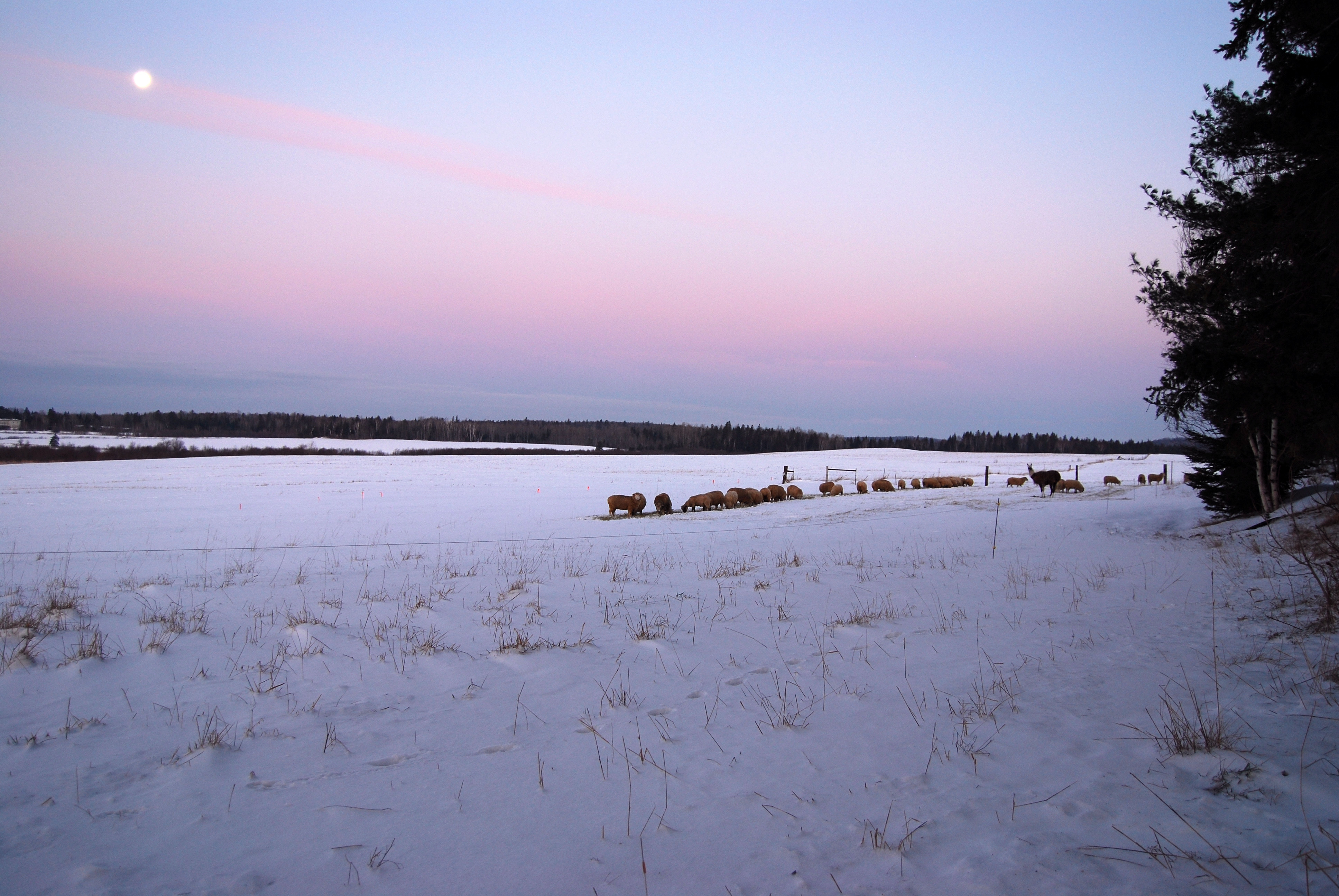
Christmas morning, 2007
The temperature climbed to 11 degrees Celsius today (about 52 Fahrenheit), almost double the previous record high from 1957. Balmy temperatures are not totally unwelcome (it’s nice not to worry about the water for the livestock freezing), but for an area with a reliable white Christmas, this still qualifies as freakish. As U.S. environmentalist Bill McKibben once said, this sort of variation from the norm isn’t just off the charts, it’s off the wall that the charts are pinned on.
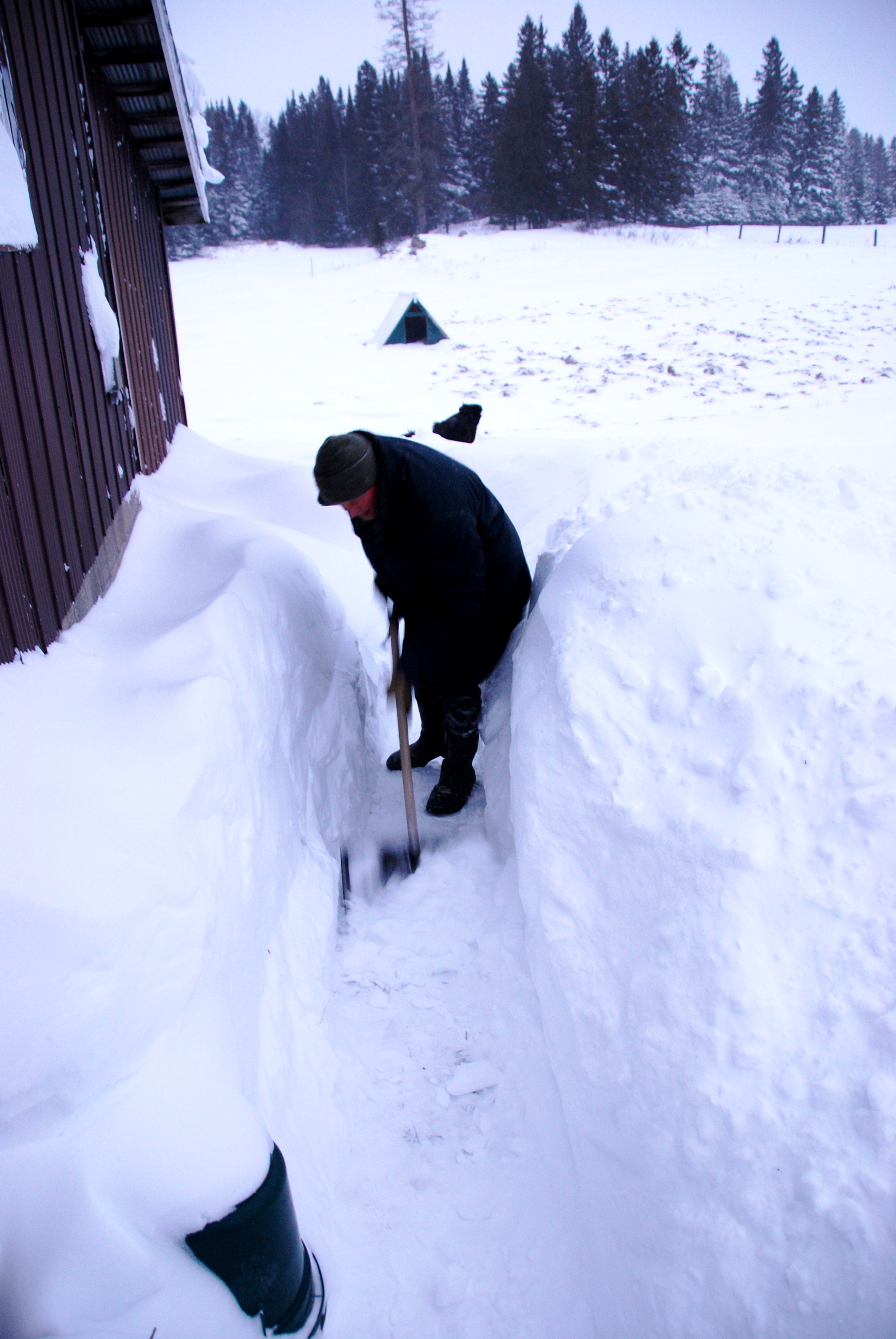
December 14th, 2010. I’m clearing a path around the barn. Lots of insulating snow here!
Golfers are understandably thrilled by the lack of snow, but I can’t help wondering what’s going on in the soil that feeds my grass, and maintains my stock. Snow acts as a blanket, insulating plant roots, animals, insects, and soil-dwelling microbes from the killing cold. It sounds counter-intuitive, but this sort of mild winter, with little or no snow cover, actually leads to colder soils, because there’s less snow to insulate the ground when freeze-up comes.
The trend is already evident in U.S. forests. In 2007 researchers from Pennsylvania State University modelled the impact of changing winters on forest soils, using Wisconsin and Michigan temperatures from 1951-2000, and checking their calculations against real soil temperatures from 39 forested sites in Michigan. Despite warmer air temperatures, mean annual soil temperatures have decreased by as much as a half a degree, Celsius. Meanwhile work in New York State maple stands finds even subtle root damage, caused by deeper frost, inhibits plants’ ability to take up nutrients in the spring. The result is more nutrients flowing into creeks, rivers and lakes with the spring freshet, fueling algal growth, and producing murkier waters. It’s an example of how even modest climate change can have unanticipated impacts.
There’s a lot to learn about the way this sort of winter will affect our fields and forests. I’m already musing about ways to reduce the impact of colder soils and warmer winters — one option, suitable for pastures, is to avoid grazing the grass too short. A longer residue will trap and hold snow, and the thatch of grass and litter on the surface should offer a little more insulation. While the culprit for this year’s snowless Christmas is a warm-water current in the Pacific known as El Nino, Environment Canada senior climatologist David Phillips says it may be a foretaste of winters to come. “We notice that our green Christmases are a little more frequent now – that’s climate change,” he told the Globe and Mail.
Whether your Christmas is green or white, I wish you all a wonderful holiday season, and much happiness in 2016.
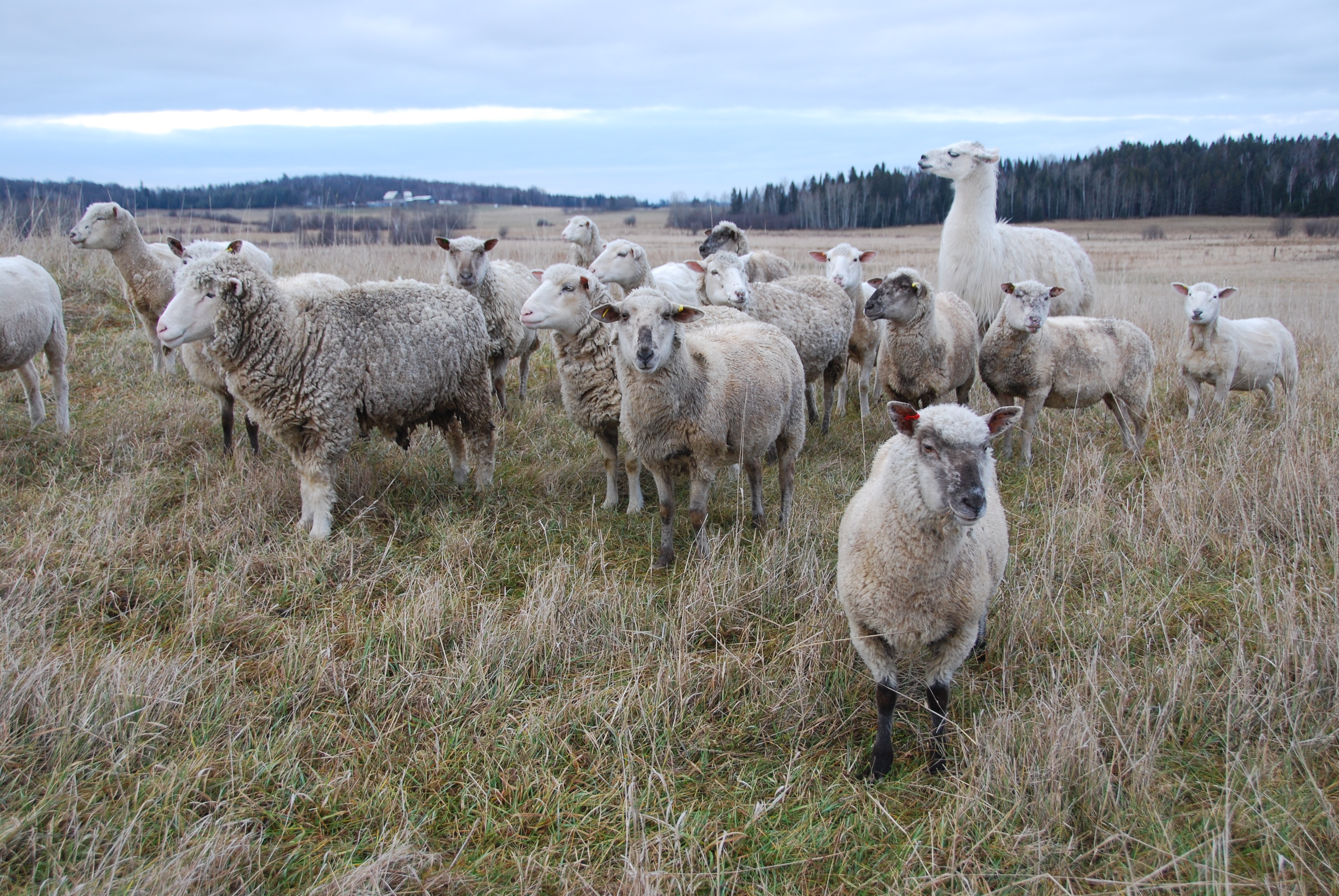
December 12, 2015. This year, even the oldest ewes will see their first green Christmas.
 Empire of grass