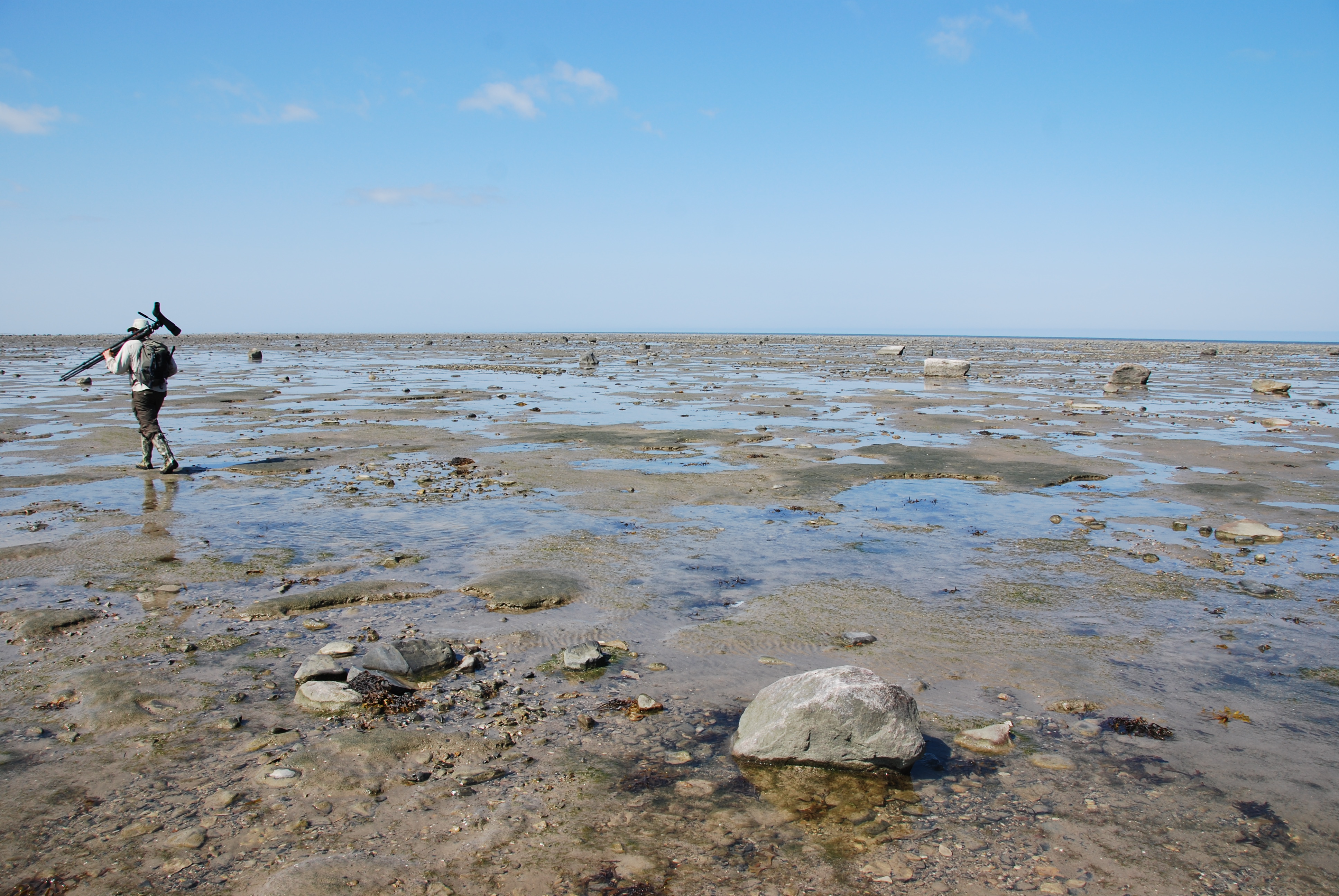
The ROMs Mark Peck on the James Bay Coast, south of the Albany River, August 2010
About a month ago a friend who’s putting together a podcast asked me: what’s a bobolink worth? Being a farmer – and thus a slave to balance sheets – I gave an economic answer. Birds are natural predators of crop pests, I said. They hunt and eat leaf-chewing cutworms and larvae for free, killing something that would otherwise cost me money. In effect, they’re making a valuable contribution to my enterprise. They’re “worth” something. They offer, as the economists say, “utility.”
This is the kind of argument that flies with farmers. In the modern world of commercial agriculture, any activity is easy to justify if it reduces costs or boosts income. Things that don’t readily convert into dollars and cents seem a little too airy-fairy, too inconsequential to waste much time on. And I must say, I was pleased with my answer.
But I admit it doesn’t work for everyone. It doesn’t even work – entirely – for me.
That point was made last year, in an e-mail exchange I had with Saskatchewan nature writer (and skilled birder) Trevor Herriot. “I have never really given that (economic) argument much credence myself – partly because this kind of logic been used for a century and it has not worked,” Herriot wrote.
“As soon as we start trying to prove that nature is onside with the economy, we are surrendering to our deeply flawed view of nature as something out there that only has value when it serves our agendas. Until we make the shift to recognizing that nature has its own intrinsic value and that we must respect life in all its forms, we will always be trying to justify nature in the very terms that are destroying it.”
Ouch, I thought. Point taken.
Herriot, the author of four books including Grass, Sky, Song; Promise and Peril in the World of Grassland Birds (HarperCollins, 2009) is an astute birder, subtle thinker, and tremendous writer. I love the way his sentences unspool on the page. He portrays his native Saskatchewan in ways that are both informative and achingly beautiful. (He also has a fantastic blog, Trevor Herriot’s Grass Notes: http://trevorherriot.blogspot.ca/)
Herriot and I are roughly the same age, meaning we’re both old enough to notice the subtle decline of birdsong in surrounding landscapes. At one point in Grass, Sky, Song, he wanders through a field that seems strangely silent, save for a jet shearing the blue arc of the sky.
He writes: “This is what it will be like, I thought, when the last birds disappear from this pasture. In my lifetime I could witness the mixed-grass prairie and its birds receding from here, like the tide going out for the last time, a long, slow wave drawing back into a sea that exists only in memory.”
Birds and other creatures aren’t just objects that help or hinder us, they have their own inherent value, agents in a creation that functions as a complex and subtle whole. I got a glimpse of this in 2010, when I was fortunate enough to be sent to the coast of James Bay (the southernmost extension of Hudson Bay) with a survey crew led by the Royal Ontario Museum’s Mark Peck. Peck’s job was to survey migrating shorebirds along the tidal flats of the salt-water coast. My job was to write about it for ON Nature magazine.
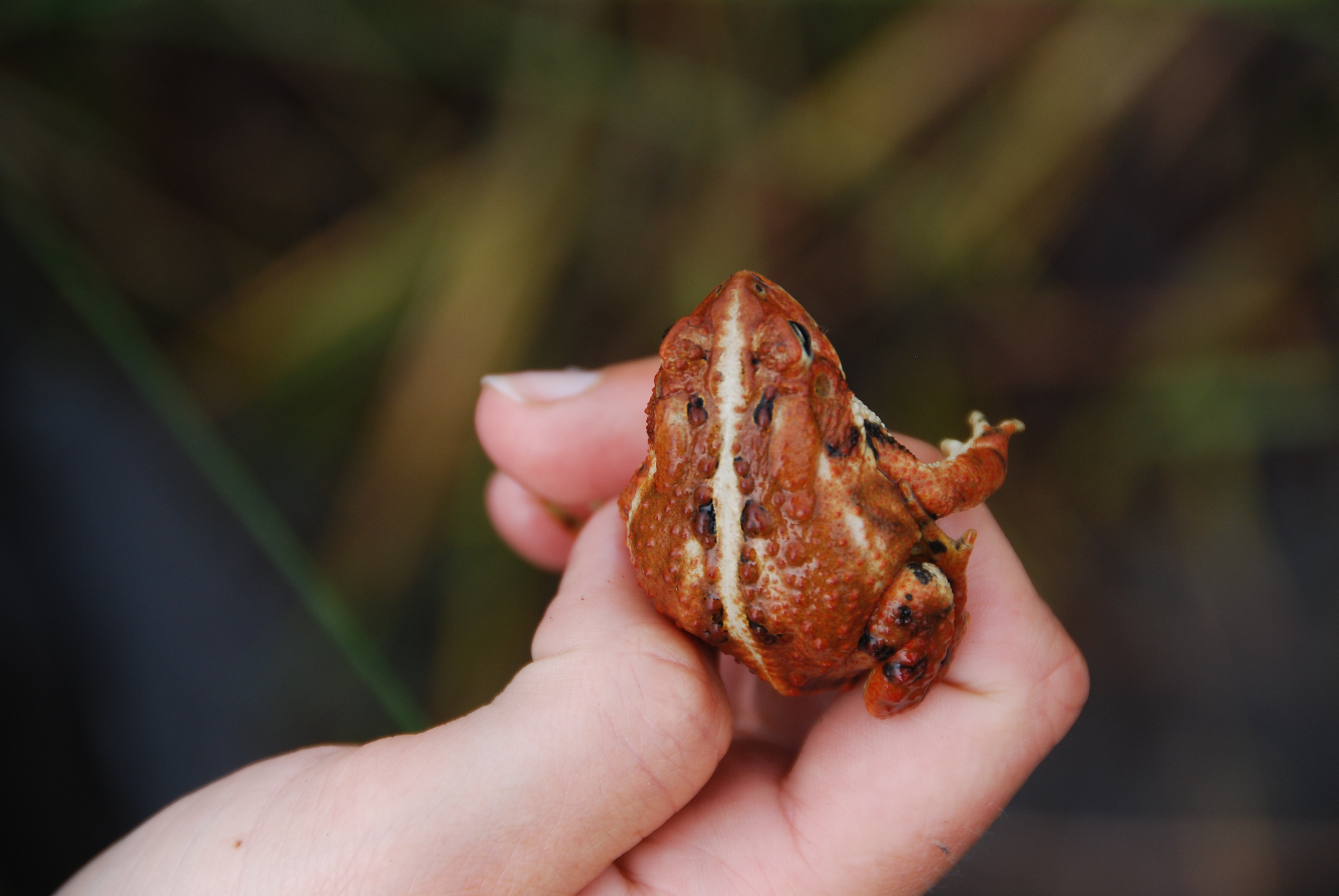
Hudson Bay toad.
What an eye-opening experience: thousands, sometimes tens of thousands of birds, raucous and wheeling, foraging and preening, in a continual parade of avian life. For the first time in my life, I was in a landscape largely unmanaged by humans, and I was astounded by the wealth of wildlife – not just birds, but fish and beluga whales, bears, wolves and caribou, even the very colourful Hudson Bay toad.
When I got back to the farm, it was as if I had new eyes and ears. I compared the dozens or hundreds of bird fluttering and twittering above my fields with the armada of wings I saw in the North. Modest though they are, these small grassland songbirds are reminders of a full and abundant life that exists around us. To lose them – to see the tide of these migratory birds go out, and not return – would be to impoverish the farm, in ways that go well beyond economics.
So I get it. To the extent that I can, I make space for other creatures, including grassland birds. In a future blog post, I’ll expand on the economic payback from birds, and discuss ways Ontario farmers are working to maintain birdsong in their pastures and hayfields. But I have to agree with Herriot: it’s not all about the money, maybe it never should be.
As Herriot said to me in an e-mail: “I still think it is a shame that when you are a farmer who likes the birds or the butterflies, you always need to justify what you are doing in economic terms.”
So economics are important. I couldn’t do what I do without an income. But grass farming can’t be reduced – can’t be simplified – to figures in a ledger.
 Empire of grass