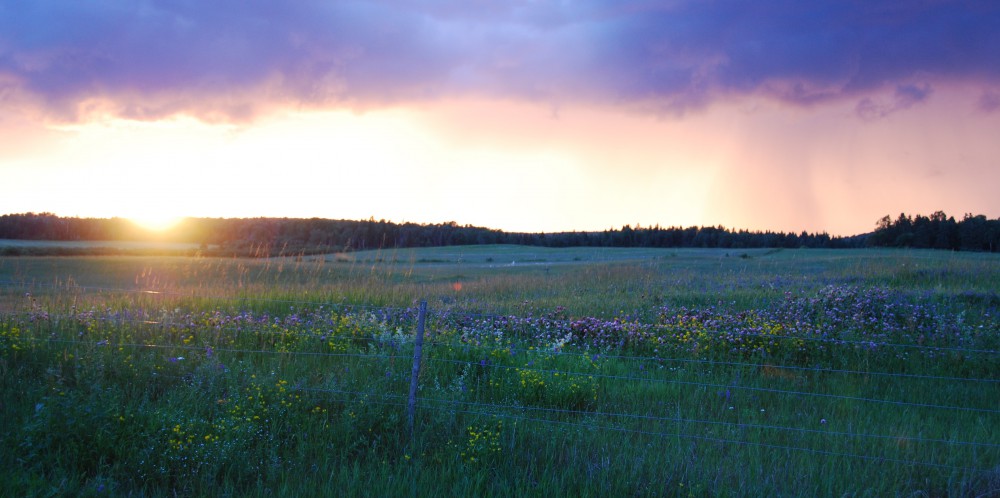
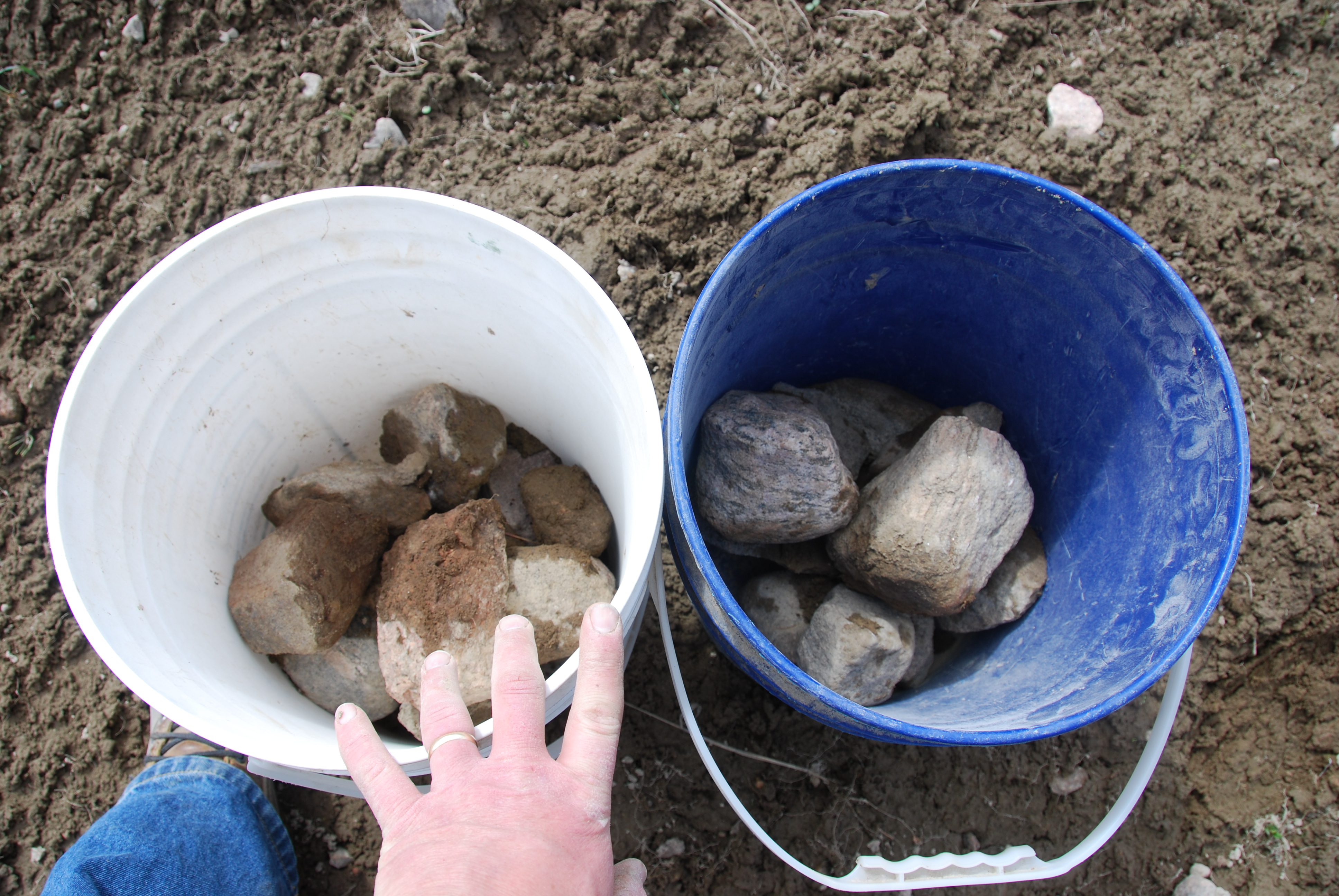
 We only till a few acres here every year, but when the land is ploughed, the first yield is stones. And so on a warm spring day I walk the field, head down, looking for any rock bigger than my fist. I pile them up, and with the help of my son, Cam, we cart them off the field, as farmers have done for thousands of years.
When I was a kid, I reckoned this as a make-work project. What could be more pointless than removing stones? Once the field was ploughed again, there’d be more stones, as if you’d never done all that work. Now that I run this operation, I understand the value of a (relatively) stoneless field. Larger stones are a hazard to equipment, of course, and even those softball-sized ones are tough on the hay mower. Besides, if you’re going through all the effort to sow a new stand of hay or pasture, why broadcast the seed only to have it bounce off stones? I’m reminded of the parable of the sower, where some seed “fell on stony ground, where it had not much earth.” When the sun scorches the shoots from those unfortunate seeds, they wither in the dry, stony soil.
So I work to give the seed the best start possible. And as I heft the stones I pause to study them – a habit I’ve had as long as I can remember. As a schoolboy in southern Ontario, I remember studying the crushed limestone gravel around the schoolyard at recess. Each piece of gravel revealed masses of tiny, fossilized sea creatures, masses of prehistoric shellfish, and ripple-shelled clams.
Now that I’ve moved north, onto the Canadian Shield, there are no fossils to study. These stones, the granites and tiger-striped gneisses, are hundreds of millions of years older than the life etched in those shards of limestone. Many are broken fragments of the Grenville Mountains, a Himalaya-like chain of mountains that girded North America 1,000 million years ago.
Now, as a respectful, if temporary caretaker of the land the Grenvilles once dominated, I tidy and shift the bones of these eroded giants. My hope is the seed will take, and the rains will be timely, and the remaining rubble of the ancient mountains will once more be hidden beneath the grass.
-30-
 Empire of grass