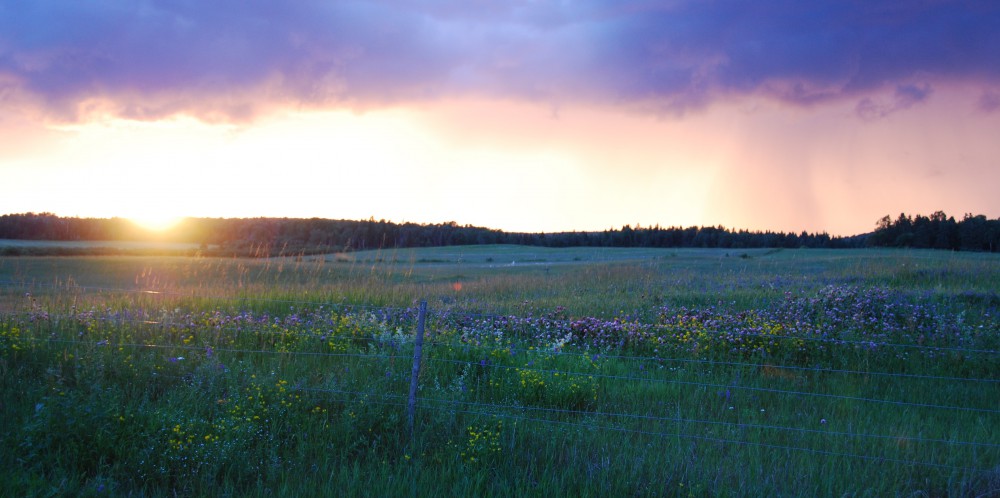
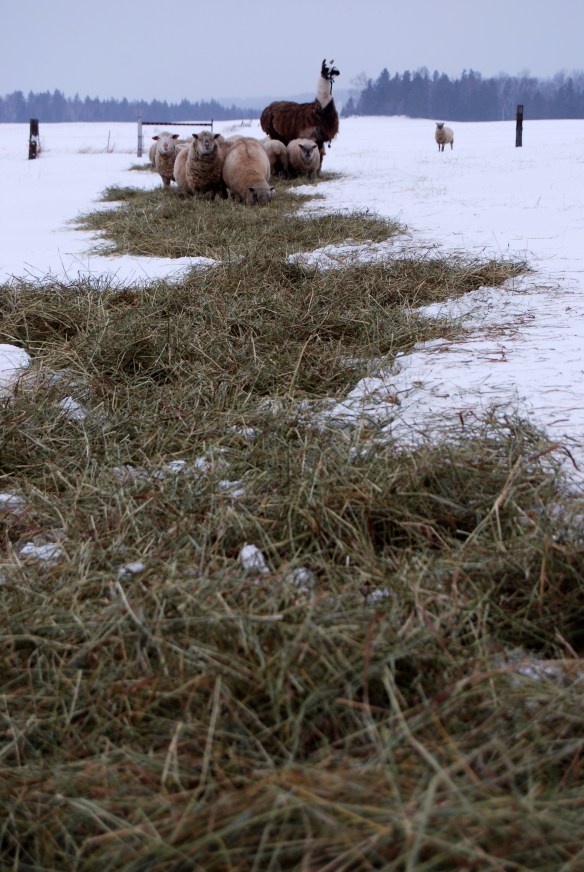
Sorry about the fence.
Near the close of the year, The Globe and Mail’s television critic runs a regular “Ten Most Irritating Canadians” column. It’s mean-spirited, of course, but I have to confess I scan it every year. (Then I feel guilty. Some of the targets are just hapless TV personalities. On the other hand, the Penguins that star in advertisements for my bank really are tiresome – how do they rate such attentive bank service? Why is their home so nice? How do they afford holidays in Italy?)
Still, this got me thinking about my own year-end list. When you’re a farmer, you learn that everyone has an opinion on food production, rural life, and how things should be done outside city limits. Food costs too much, it tastes too bland, isn’t good for you, despoils the environment, etc. Mostly, I bite my tongue. Agriculture is a complex business. Responding to even one off-hand comment in a thorough way would probably derail a conversation.
So I usually let the opinions lie, even though they’re “teachable moments” – occasions for a thorough discussion that educates both participants, and helps us understand one another.
In honour of 2016, here’s one belated response to a travel story. It’s a review of The Pig at Combe, a “luxury boutique hotel” in a restored manor in England’s Devon countryside. With rooms starting at $243 Canadian a night, the hotel gets a glowing review, except for one unpardonable design fault:
“The mile-long drive leading up to the hotel is rather marred by downmarket electric fencing that keeps livestock…from straying onto the road. Wooden post and rail fencing would be far more fitting.”
My wife, Sue, read this and burst out laughing. But I spluttered in outrage: “Hey, are you calling my fencing downmarket? I paid good money for that fence…”
Now that I’ve settled down, here’s a more thoughtful response. The beauty of modern high-tensile fencing isn’t so much aesthetic as it is functional: it keeps animals off the road, at lower cost and more effectively than say, wooden post and rail. The secret lies in the psychology of an electric shock. Once you’ve got one (and this goes for farmers, too) you remember it, and stay away from the fence. Unlike post and rail, where animals scratch themselves, and push and work until there’s an enticing gap, well-maintained electric fences tend to garner respect. The benefit is enhanced safety from a fence that keeps animals in, and predators out.
As a bonus, temporary electric wire can be used to subdivide fields, giving grass time to rest in a managed rotational grazing system, and protecting environmentally sensitive areas. In this respect, the beauty is what happens inside the fence: a thicker, more diverse, healthier sward with richer soil, and more contented livestock. Properly managed, these fences can be a crucial part of the working landscape – infrastructure that helps feed people and livestock, stores carbon, provides clean water, and makes space for wildlife.
All in all, it’s really quite an upmarket solution to an age-old problem. Here’s wishing you a very happy 2017, full of opportunities for learning, growth, and your own teachable moments.

 Empire of grass