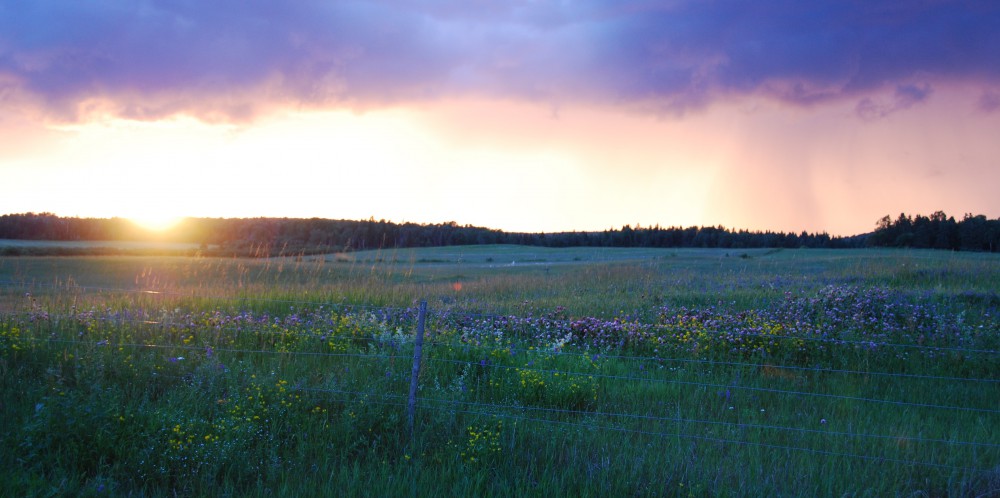
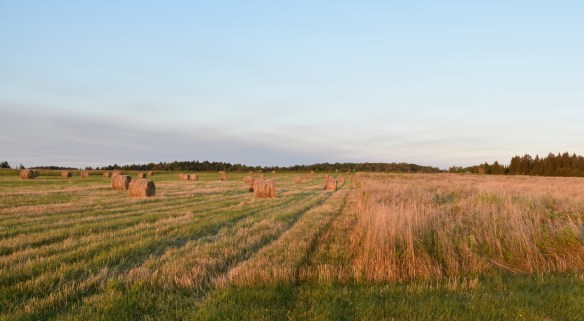
12 September, and that’s standing hay on the right. (It’s not supposed to be brown.)
As species go, Homo sapiens is pretty good at spotting immediate threats. Got a sabre-toothed tiger lurking outside your cave? Being sapiens helps you avoid the predator, and allows you to survive to meet another challenge.
These days, we worry less about predators, and more about how we’re stacking up on social media. But we still react to obvious and significant threats. Got a tornado bearing down on your home? Most people will take cover (perhaps after snapping a selfie.) Hurricane bound for your region? Time to board up the windows, and maybe bug out while there’s still time.
Threats that seem distant and incremental, on the other hand, draw a slower response. After all, climate change, or workplace automation could be a problem, but maybe not right here and right now. Or they’re problems someone else will solve, long before the climate or the robot at the office become the 21st century version of the tiger outside the cave.
But what if those distant, slow-motion problems grow suddenly, and without warning – perhaps because we haven’t been paying attention, or haven’t perceived the threat.
For farmers in my area, the summer of 2017 was a good example. The growing season was wet, and almost consistently showery. It delayed the onset of planting, and when haymaking time came, it was conducted in fits and starts, if at all.
Hay is the make-or-break fodder on our farm, the basic winter feed for cattle and sheep. Harvesting high-quality hay is an annual summer obsession for stock farmers. Success depends on a mix of good timing (for us, that’s succulent grass and legumes mowed in late June or early July) and clement weather (three or four days of sun and wind to dry the hay.)
If hay is baled too damp, it spoils or heats in the barn, and could trigger a fire. If the grass is cut and then rained on, the goodness flows out of the forage like boiling water on tea leaves. If wet weather forces you to wait, you are still penalized. As the grass matures, the protein and feed value slowly drains away.
So farmers sweat it out during hay time, impatient for the harvest to begin, and fretful when it’s delayed. Around here, if your first cut of hay isn’t done by mid-to-late July, you’re probably harvesting sub-par stuff. As one grower once told me, feeding late-cut hay is like “buying a box of breakfast cereal, dumping the contents out, and then eating the box.”
This year, with near-constant showers and downpours that flooded fields, we waited, and stewed. It wasn’t until July 15 that we could start baling hay — a full month later than in 2016. The weather remained spotty in July. We missed a couple of good haymaking days for a family wedding, and an equipment breakdown. At the time, it seemed like no big deal. Surely a bout of sunny, dry weather was right around the corner?
But the sun shone only fitfully, and our situation became increasingly dire. By mid-August I only had about half the hay I need to get through the winter. Family discussions shifted to worst-case scenarios, including reducing the flock and herd, or buying hay.
Fortunately, the clouds cleared for the last week in August. Though the fields were wet and the weather cool, I was able to make enough hay to get through the winter. We’ll still have nutritional challenges – and spend much more on supplemental grain and protein this year – but we have enough “stuff” to keep the stock feeling full.

Wheel tracks in a wet field. This is not “regenerative agriculture.”
The weather was unusual, but we live in an era where what was once odd is now nearly commonplace – not to mention regional trends towards wetter, stormier seasons. What surprised me most was the way the showers continued throughout the summer. In other years, the pattern would break, and we’d see “normal” haying weather, even if it came a few weeks late. In 2017, an extended period of warm, sunny weather didn’t hit until early September.
In other words, I failed to see the tiger creeping up to the mouth of the cave. At first the showery weather was an inconvenience or an annoyance, something to wait out. Then, as we ran out of summer days, the once-distant problem became a clear and obvious threat – one that grew so rapidly, in retrospect, we were shocked we didn’t see it coming.
What’s the lesson to be learned? I’m not sure. I’ve grown up playing this farming game by rules that were handed down by previous generations: there’s a time to plant, and a time to harvest. If you’re patient, the right weather will materialize.
But what if a changing climate has altered the game, and the techniques and standards I’ve learned no longer apply? While we’re scouting for signs of a tiger outside the cave, perhaps a different threat is on the way.
-30-
 Empire of grass