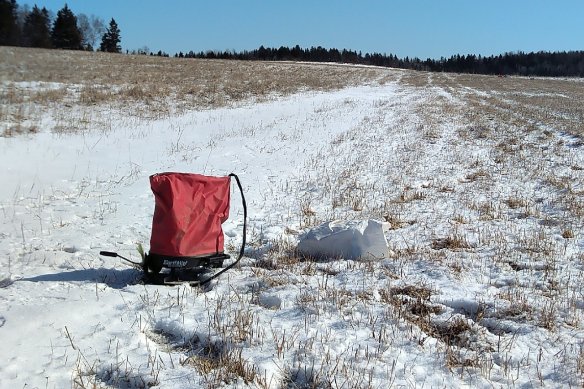
21st March 2020: A hand-cranked seeder, a bag of seed, and a snowy field: let the pasturing season begin!
The morning was so still that at sunrise, frost crystals glittered over the snow like diamond dust. The thermometer read -11 C. (12 F). True, this was a chilly Saturday in late March, but in a world on lockdown, I was glad to get out and sow seeds for the future.
“Frost-seeding” is the pasture farmer’s no-till seed drill, a way to get seed into the ground without the help of costly machines and thudding diesel engines. At its most basic, you walk atop a skiff of snow, spinning a flurry of seeds over the field with a hand-cranked cyclone seeder. The tiny packaged plants – red clover, bird’s-foot trefoil, white clover – help mark your path by landing as dark pinpoints in the snow.
Eventually, many of those seeds will work their way into the rooting zone. Freezing and thawing opens and closes the earth’s pores, while snow and rain drive those round and relatively heavy seeds into the soil’s embrace. When and if the seeds grow, they’ll nourish grazing livestock, increase plant diversity in the pasture, draw nitrogen from the air for use at the root level, and boost soil texture.
But frost-seeding is also a gamble. Will you get enough freezing and thawing? Will the rain and snow come? Is your pasture well-prepared to receive this seed? I try to prepare areas for frost-seeding by grazing in late fall, removing enough plant cover that the seeds can work their way through the canopy to the bare soil. Even so, every frost-seeding reminds me of the New Testament parable of the sower: some of that seed will land in areas covered with a lot of grassy “thatch”, and never reach the soil.
But I like the odds. Even though I sometimes use a tractor and mechanical broadcast seeder, the cost in fuel and machinery are modest. Seed is around $30 an acre, so there’s definitely some cash outlay if you’re covering big acres. I try to spread out the risk by covering 4-10 acres per year, concentrating on zones that will benefit most from the improvement.
This year, with about six acres to do, I left the tractor in the shed and did the seeding on foot. This beautiful crisp morning offered time in the fresh air and – as a major bonus – a morning away from concerns about the coronavirus pandemic.
Like a lot of rural residents, I patch together a mix of things to make a living, including farming, writing, and, (for what’s supposed to be a part-time gig) acting as the local municipal emergency planner and fire chief. In February our emergency management committee thought it was time to lay plans for a pandemic, so I went to work researching the illness, following its spread, learning the arcana of epidemiology and outbreak modelling, and drawing up policies to help the township and the volunteer fire department continue to function.
It was a necessary but dispiriting effort, partly because the disease’s potential seemed so dire, but also because there didn’t seem to be enough attention paid to this viral disruption. I remember mentioning to my wife Sue that it felt as if a major snowstorm was on the way, but we didn’t know exactly how severe the blizzard would be, how long it would last, when it would strike, and whether we were really prepared for it.
Now much of the world has been engulfed by the storm, and the disorienting changes it has wrought. In my own area the impact has been thankfully less severe, but we may still be in the initial stages of a long-lasting disruption.
With spring about to set in and the snow well gone (I hope.) I’ll be looking for signs my frost-seeding has yielded benefits. I’m grateful for that day in March and the respite it offered, and I’m thankful for the opportunity to make a small, hopeful investment in the future. As you navigate the outbreak’s impacts where you live, I wish you good health and continued resilience. And while you may not need to frost-seed your pasture, I hope you’ll find ways to make small, hopeful investments in your own life, and in the life of your community.
-30-
 Empire of grass