City of grass

dsc_0027

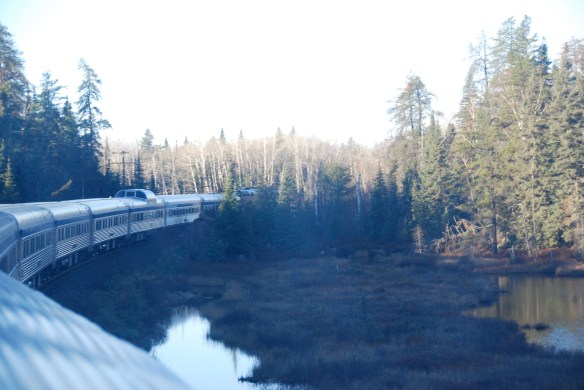
Via Rail’s The Canadian, making its way towards Winnipeg through northwestern Ontario.

For a time it was the Chicago of the North, a prairie colossus swollen by immigration and driven by the power of the threshing machine and locomotive. From its position at the confluence of the Red and Assiniboine Rivers, Winnipeg seemed destined to funnel grain to the hungry nations of Europe, and to become a metropolis for millions.

It hasn’t quite worked out that way– not yet– for for Manitoba’s capital. Other western cities took their share of the grain trade, or grew larger on oil and trade with Asia. Today Winnipeg’s population is about 728,000, and the city’s broad avenues and early 20th Century architecture make for good sight-seeing. I was in Winnipeg in mid-November for the Canadian Forage and Grassland Association conference (more about that in future posts.) Though the meeting was held downtown, near the corner of Portage and Main, I was keen to see what I could of the province’s tall grass prairie heritage.

dsc_0126

Winnipeg’s ornate and beautifully-restored Union Station, officially opened in 1912.

This swath of southern Manitoba was once covered by chest-high stands of prairie plants and grasses, part of a tall grass prairie that sprawled over 1.5 million acres from Manitoba south to Texas. In some regions, the cover grew so high people were literally submerged within a forest of grass. An early Spanish explorer said a man on horseback could easily become lost in the dense vegetation.

Now, with temperate grasslands the world’s most endangered ecosystem, I wanted to learn a bit about what was lost, and maybe see what remained. Granted, mid-November isn’t the best time to see the prairie in its finery, but after my train rolled in on Monday morning, I hoofed it over to the Manitoba Museum hoping to take in its Grasslands Gallery. The bad news is the museum is closed on Mondays, and that was my only free day before the conference. The good news? It’s a lovely walk along the Red River.

A good summer destination would have been the city’s Living Prairie Museum: 32 acres of remnant tall grass, squeezed between housing and an industrial area. The land was saved (by one vote) by a far-sighted city council in 1971. Now the museum is home to over 150 plant species, countless insects, birds, and animals, large and small.

A major draw is July’s Monarch Butterfly Festival, but the museum also plays host to planting workshops, native plant sales and school tours. During the winter visitors snowshoe the grounds on Sundays, or attend an annual lecture series.

July and August are peak months for visiting. “Now that more people are aware of how rare tall grass prairie is, they’re coming to see it with more interest,” says museum director Sarah Semmler. “We get people from the local area who have never visited a tall grass prairie. We have people coming from Australia, Europe, the U.S. who have an interest in grasslands, and people from across Canada doing road trips.”

As for four-legged visitors, the largest these days are white-tailed deer. “Historically, we had bison on the site. We have the wallows to prove it.” Semmler adds.
dsc_0038

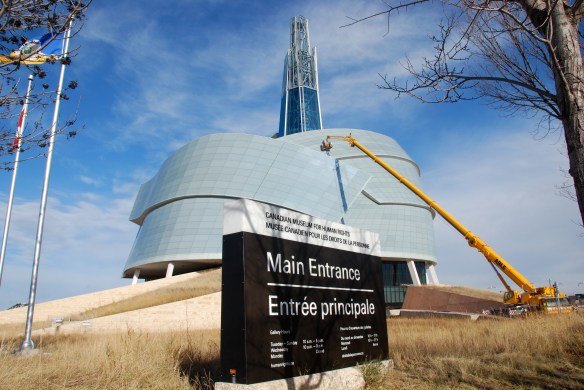
The Canadian Museum for Human Rights rises from a surrounding five-acre planting of prairie grasses and wildflowers.

In recent years Winnipeg has worked hard to retain and display its botanical roots. On my way out of Union Station, I noticed planters featuring prairie grasses. At the nearby Canadian Museum for Human Rights, the glass superstructure swirls out of native limestone, surrounded by prairie grasses.

Native Plant Solutions, an arm of Ducks Unlimited Canada, sowed the mix of native prairie species around the museum in 2014. The job included installing about a foot of topsoil atop a compacted building site – hardly ideal ground for such deep-rooted plants – then planting about a dozen species, ranging from towering big bluestem and native wild ryes to short-growing buffalo grass and showy prairie clovers. “It’s a shotgun approach,” manager Glen Koblun says. The goal is to mimic a natural stand, with a mosaic of vegetation that adapts to local conditions.

Thanks to the limited top soil, he adds, “you’re not going to have six-foot bluestem, but you will have it waist high, or so.”

Meanwhile Native Plant Solutions has been sowing prairie plants and landscaping everything from retention ponds and utility corridors to residential areas. Even with occasional managed burns, prairie grasses require about a third to half the upkeep of conventional sod. Koblun says municipal authorities like the idea of saving taxpayers’ dollars and at the same time restoring native species.
dsc_0031

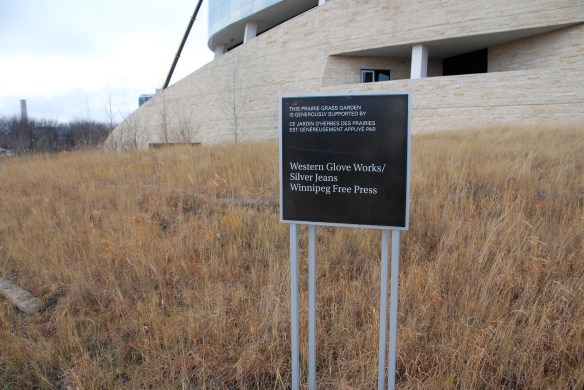
The museum’s landscaping was backed by private and community sponsors.

Koblun reckons the firm has replanted about 600 acres in the provincial capital. So while only the slimmest fraction of that original ocean of grass remains, these new plantings – and remnants such as the Living Prairie Museum – mean the region’s botanical heritage is not forgotten. Much of the domain of the prairie grasses may have been usurped by concrete and glass. Yet the grasses persist, a reminder of what has been lost, and a promise that recovery is still possible.


-30-
Share the land

14136

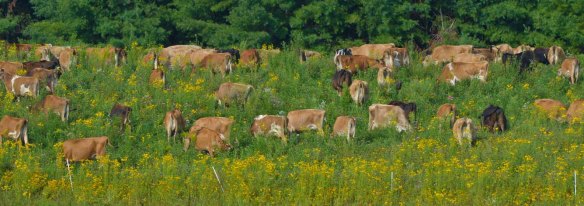
Bill Van Nes’ Jersey cattle dairy cattle grazing a tallgrass prairie mixture in western Ontario. Photo courtesy Bill van Nes.


An old Guess Who song – delivered in Burton Cummings’ rock-crooner voice – is rolling through my head:

Maybe I’ll be there to shake your hand (Shake your hand)

Maybe I’ll be there to share the land (Share the land)

That they’ll be givin’ away

When we all live together…


For those unfamiliar with the Winnipeg band, the Guess Who cranked out at least a dozen hits in the ‘60s and ‘70s– tunes that still fill airwaves on Classic Rock FM stations in Canada. Burton Cummings, Randy Bachman and the boys grew up on land that was probably once tallgrass prairie. By the time they were a garage band in the early ‘60s, most native grassland had been ploughed up and transformed into grain fields. (Not surprisingly, the band has an album called “Wheatfield Soul.”)

Now the Guess Who are helping me pull together a couple of approaches to land management. The last post outlined two ways to farm and conserve the natural world: “land sparing,” converting some areas into highly-productive crop fields in order to spare remaining natural areas; and “land sharing,” creating a countryside with room for both humans and wildlife. Continue reading

The ‘land sharing’ economy

dsc_0938

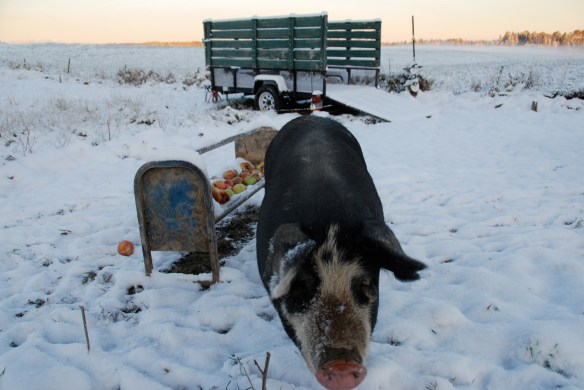
Is this little piggy ready to share?


For most of its 12,000-year history, the standard approach in agriculture has been to care for our crops and animals, while trying to exclude everything else.

Got predators? Build a fence.

Got weeds? Pull ‘em out.

Got insects or diseases threatening your crops or livestock? If you’re lucky, you can find the solution in a spray tank, or a medicine bottle.

The result is modern monoculture: individual crops dominate fields, and a handful of domesticated plants sprawl over vast areas. Visit farm country, and you’re apt to see rank after rank of corn, or soybeans, or cereal grains striding across countless acres, with as little competition as possible. It’s an efficient way to produce commodities. And after all, when you’re a farmer, no one’s paying you to grow weeds or harbour wildlife.

At the same time, monocultures are hard on the natural environment. Landscapes covered by a single crop are necessarily uninviting for other creatures – except for the pests that eat that crop. As the human population expands, the conventional approach to agriculture risks turning earth into a planet of croplands, while the rest of creation is shoehorned into the margins. (As I write this, the World Wildlife Fund has released a report saying this process is already well underway, with populations of mammals, birds, fish, amphibians and reptiles falling by almost 60 per cent since 1970.) Continue reading

Silent skies

pif-cover

A story in the morning newspaper highlights a loss so subtle, it may have escaped your notice. During the past 40 years, according to the most recent survey, about 1.5 billion of North America’s land birds – out of a population of about 11.5 billion – have disappeared from our skies.

The causes are complex: urban expansion, changes in agriculture, and climate change, among others. Some declines remain mysterious. Why are so many “aerial insectivores” – birds that eat insects – disappearing? Are there really fewer insects flitting overhead or smearing car grilles now, compared to 40 years ago? And if that’s true, what does it say about our environment?

In short, it suggests we have significant problems. As a group, birds tend to be well adapted to their environment. So when 86 of North America’s 450-odd breeding bird species are vulnerable to outright loss, that’s a symptom of rapid and widespread change on our shared landscapes. As the report, Partners in Flight Landbird Conservation Plan reads, “birds are excellent indicators of overall environmental health—and their loss signals danger.” Continue reading

Respect for the “stay-at-home mom” of crops.


DSC_0543

Grass, it’s safe to say, is the Rodney Dangerfield of crops. Like the old-time Borscht Belt comedian who spat out one-liners while twisting his tie, it’s part of the landscape. Its shtick is too familiar. It gets no respect.

I was reminded of this at a meeting that brought scientists and farmers together. The science types – most of them studying grassland birds – were using the jargon of their trade. They divided farm fields into “intensive agriculture,” including corn, soybeans, and horticulture, and “non-intensive agriculture,” – hayfields and pastures.

            The lingo carried on until, late in the day, Lambton County cattleman and cash cropper Chad Anderson stood up and cleared his throat. This whole “intensive non-intensive” thing, he said, really stuck in his craw. Grass is not a second-class citizen, he said. Getting the most out of pasture demands sophisticated management, intensive management, and at least as much or more brainpower than any other crop. Then there are the ancillary benefits of more grass on the landscape: soil fertility, water quality, carbon sequestration, and sustenance for everything from pollinators to birds and wildlife. Continue reading

Harvest of granite

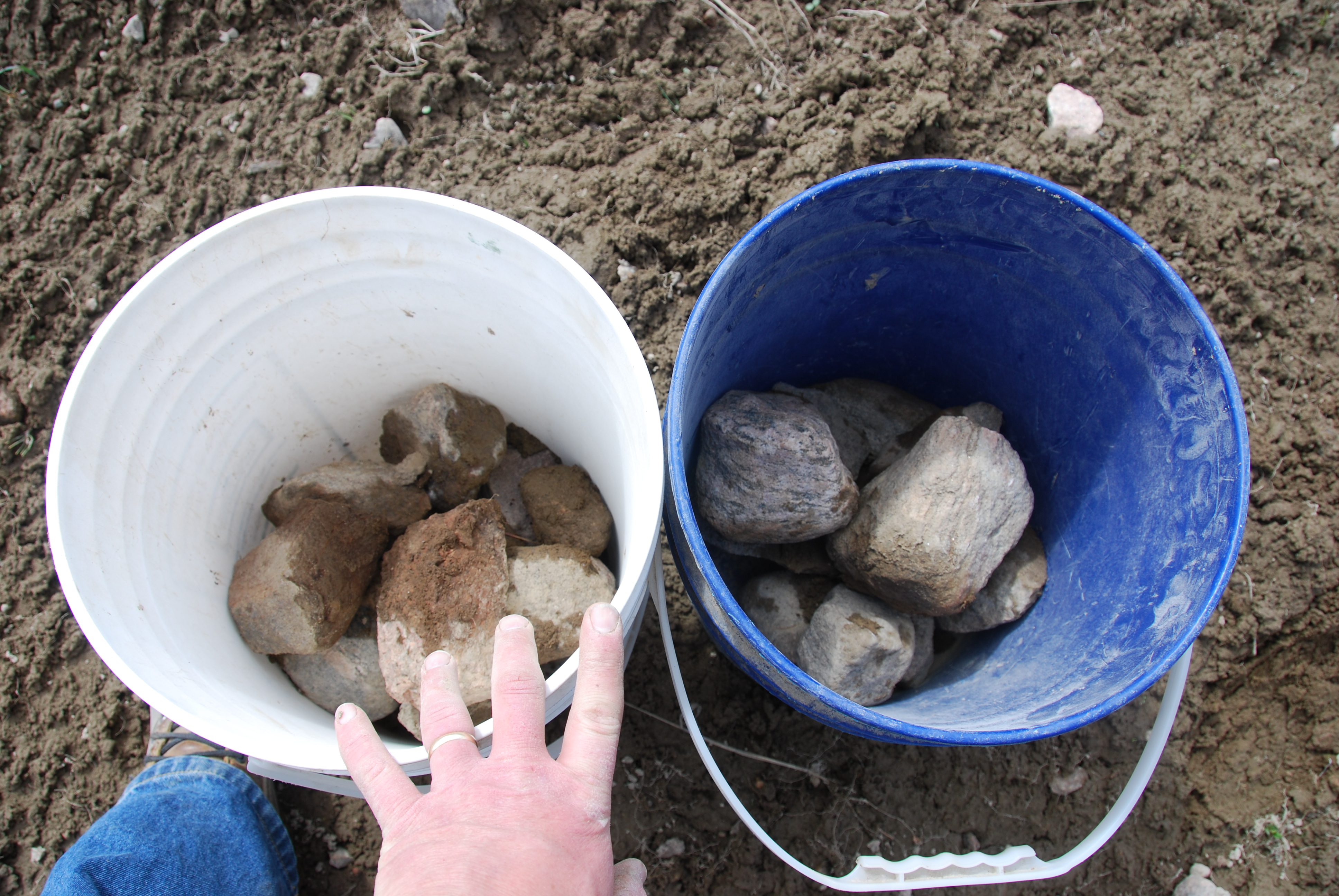
DSC_0772We only till a few acres here every year, but when the land is ploughed, the first yield is stones. And so on a warm spring day I walk the field, head down, looking for any rock bigger than my fist. I pile them up, and with the help of my son, Cam, we cart them off the field, as farmers have done for thousands of years.

When I was a kid, I reckoned this as a make-work project. What could be more pointless than removing stones? Once the field was ploughed again, there’d be more stones, as if you’d never done all that work. Now that I run this operation, I understand the value of a (relatively) stoneless field. Larger stones are a hazard to equipment, of course, and even those softball-sized ones are tough on the hay mower. Besides, if you’re going through all the effort to sow a new stand of hay or pasture, why broadcast the seed only to have it bounce off stones? I’m reminded of the parable of the sower, where some seed “fell on stony ground, where it had not much earth.” When the sun scorches the shoots from those unfortunate seeds, they wither in the dry, stony soil.

So I work to give the seed the best start possible. And as I heft the stones I pause to study them – a habit I’ve had as long as I can remember. As a schoolboy in southern Ontario, I remember studying the crushed limestone gravel around the schoolyard at recess. Each piece of gravel revealed masses of tiny, fossilized sea creatures, masses of prehistoric shellfish, and ripple-shelled clams.

Now that I’ve moved north, onto the Canadian Shield, there are no fossils to study. These stones, the granites and tiger-striped gneisses, are hundreds of millions of years older than the life etched in those shards of limestone. Many are broken fragments of the Grenville Mountains, a Himalaya-like chain of mountains that girded North America 1,000 million years ago.

Now, as a respectful, if temporary caretaker of the land the Grenvilles once dominated, I tidy and shift the bones of these eroded giants. My hope is the seed will take, and the rains will be timely, and the remaining rubble of the ancient mountains will once more be hidden beneath the grass.

-30-

Invaders and Allies

Skipper

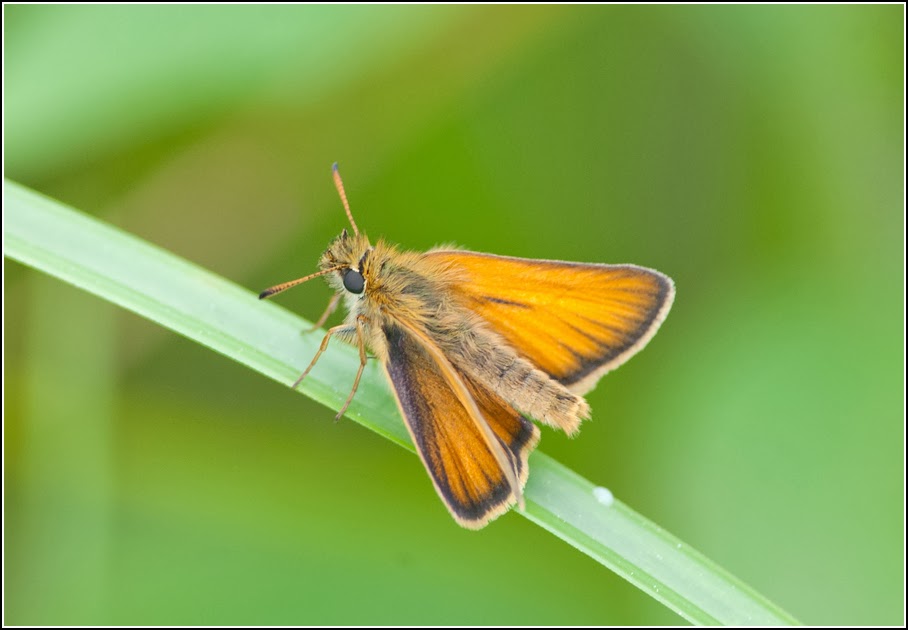
They swirl across the fields in flurries of orange and buff — tiny, delicate butterflies that skip and flutter like wind-blown autumn leaves. Beautiful though they are, these European skippers (known as the Essex skipper in the UK) are costly pests for northern Ontario hay growers.

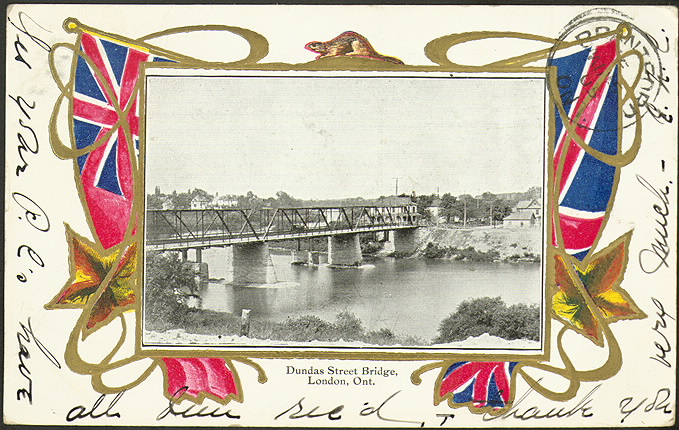
The skipper, Thymelicus lineola is a relative newcomer to North America. Sometime early in the last century, a shipment of British glassware – packed in dried grass – arrived in London, Ont. The packing material ended up in a dump near the Dundas Street Bridge, and by July of 1910, a sharp-eyed Londoner named John Morden noticed there were new residents in the city: small, pale-green larvae were chewing their way through grass near the bridge. Later, small orange butterflies were fluttering about town.

Both worm and butterfly are stages of the European skipper, a pest with a taste for common agricultural grasses, especially timothy. By 1927, the skipper had reached Detroit. In the early ‘50s, it was defoliating pastures and hayfields in Ontario’s Grey County, some 170 kilometres from London. About a decade later, it arrived in my area of northern Ontario, a meandering 400-kilometre flight north of the Dundas Street Bridge.

1910 postcard of London's Dundas St. Bridge. Can you see the newly arrived European skippers?

1910 postcard of London’s Dundas St. Bridge. Can you see the newly arrived European skippers?

As they spread out, the insects drew the attention of farmers and motorists. Swarms of skippers “have been reported as locally annoying in many counties, with car radiators plugged and windshields smeared by driving through them,” says a Michigan State University bulletin from 1978. “The most serious infestations have been in the easternmost Upper Peninsula where estimated losses of grass hay have been up to one ton per acre “ – somewhere around a third to a quarter of the crop.

I’m on the receiving end of this voracious consumption. Most years, the larvae merely chew away some of my timothy. But in the worst case – and fortunately, I’ve only seen this once – they’ll strip the leaves off an area, leaving a forest of stems punctuated by neglected remnants of alfalfa or clover. (The skipper larvae prefer grasses to legumes.)

Fortunately, I’ve got an ally in the grass, a predator that takes advantage of the larval bounty: the bobolink. When I walk out to the pasture in June, I often see male bobolinks eyeing me from the fence wires, wriggling skipper larvae in their beaks. They’re low-cost pest control, packaged as attractive songbirds.

About the time the skipper was making its way into Canada, birds were being touted for their agricultural benefits. F.E.L (Foster) Beal was an “economic ornithologist” for the U.S. Dept. of Agriculture’s Biological Survey, helping farmers sort the “good” birds — the ones eating pests — from those targeting crops. Beal argued birds as a group are overwhelmingly beneficial. “In the course of a year birds destroy an incalculable number of insects,” he wrote in the Farmer’s Bulletin in 1915. “It is difficult to overestimate the value of their services in restraining the great tide of insect life.”

It’s an argument University of South Carolina biologist Andy Dyer picks up in his 2014 book Chasing the Red Queen. As agriculture shifts to ever more vast areas featuring just a handful of different crops, farmers have laid out an easy-access buffet for pests. Extensive fields of corn, soybeans, or cereal grains afford little habitat for insect-eating birds, for example, but offer a bounty for pests. Although chemical pesticides have helped make these crop monocultures productive, they’ve also produced a decades-long arms race, as pests evolve to resist the chemicals, and researchers are forced to devise new pesticides.

But while an insect can evolve to shrug off a pesticide, it can’t evade a bird so easily. Predators, including the bobolink, evolve along with their prey.

These days, when Trent University graduate student, Alice Pintaric, surveys insects in bobolink nesting areas, she sees a fair number of skippers. “Most of my observations of parents feeding young was with butterfly larvae specifically skippers,” she told me in an e-mail. It fits in well with a 1987 observation that bobolinks and their nestlings consume 8.65 grams of insects, per nest, per day.

To my utilitarian mind this level of “free” pest control is a strong argument for the preservation not only of grassland birds on the landscape, but of grasslands within agricultural areas. The birds sheltering on my farm aren’t just foraging on my land, but could be snapping up skipper larvae, or armyworms, or grasshoppers in neighbouring grain fields, too. In short, these birds are unacknowledged allies, complementing my efforts in the hayfield and pasture.

The challenge, then, is to find a way to make space for the bird and still be productive enough to stay in business. In a future post, I’ll talk about ways farmers are trying to share their pastures and hayfields with grassland birds, and the approaches I’ve been trying on my own farm.


-30-


Why care about grassland birds?

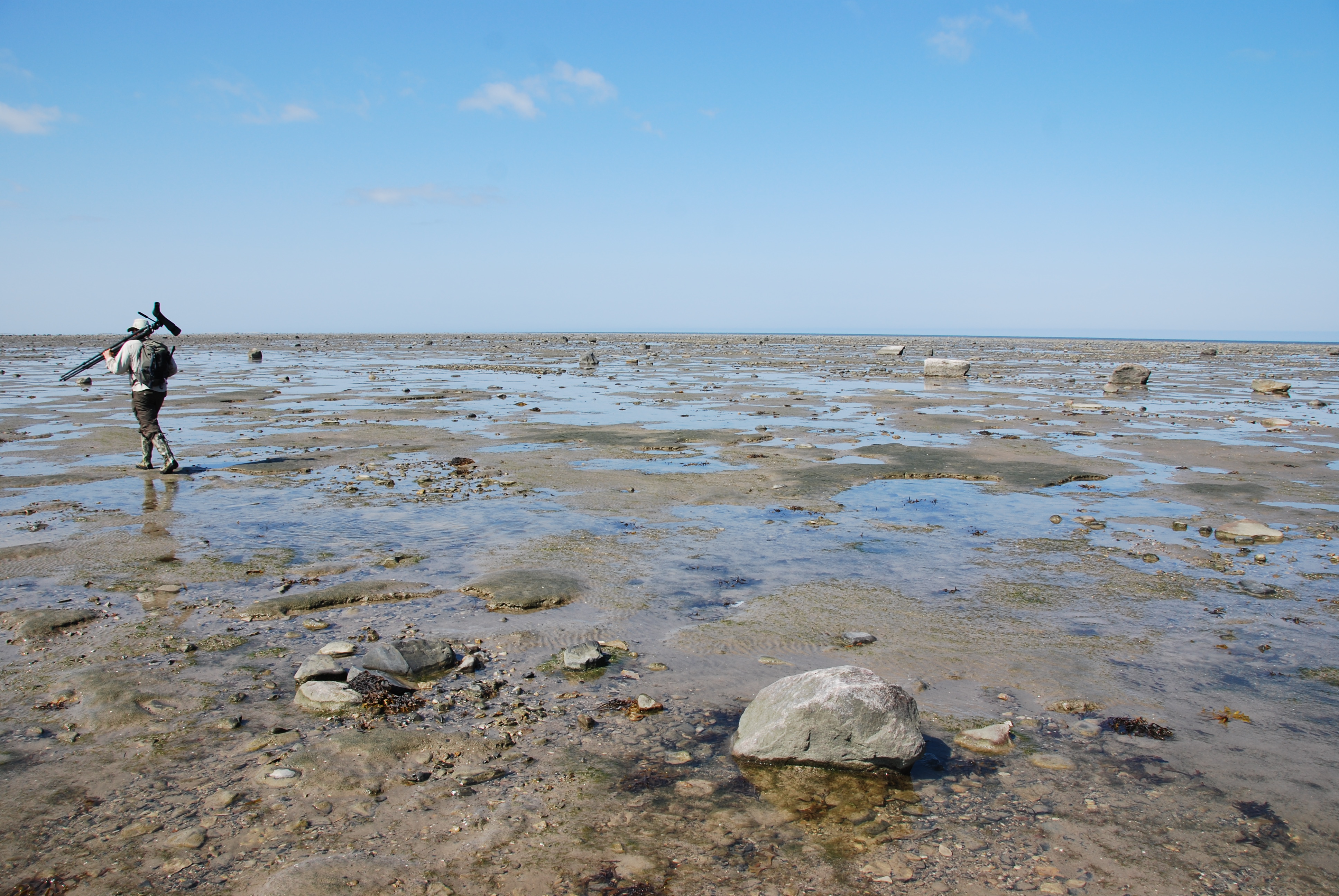
The ROMs Mark Peck on the James Bay Coast, south of the Albany River, August 2010

The ROMs Mark Peck on the James Bay Coast, south of the Albany River, August 2010

About a month ago a friend who’s putting together a podcast asked me: what’s a bobolink worth? Being a farmer – and thus a slave to balance sheets – I gave an economic answer. Birds are natural predators of crop pests, I said. They hunt and eat leaf-chewing cutworms and larvae for free, killing something that would otherwise cost me money. In effect, they’re making a valuable contribution to my enterprise. They’re “worth” something. They offer, as the economists say, “utility.”

This is the kind of argument that flies with farmers. In the modern world of commercial agriculture, any activity is easy to justify if it reduces costs or boosts income. Things that don’t readily convert into dollars and cents seem a little too airy-fairy, too inconsequential to waste much time on. And I must say, I was pleased with my answer.

But I admit it doesn’t work for everyone. It doesn’t even work – entirely – for me.

That point was made last year, in an e-mail exchange I had with Saskatchewan nature writer (and skilled birder) Trevor Herriot. “I have never really given that (economic) argument much credence myself – partly because this kind of logic been used for a century and it has not worked,” Herriot wrote.

“As soon as we start trying to prove that nature is onside with the economy, we are surrendering to our deeply flawed view of nature as something out there that only has value when it serves our agendas. Until we make the shift to recognizing that nature has its own intrinsic value and that we must respect life in all its forms, we will always be trying to justify nature in the very terms that are destroying it.”

Ouch, I thought. Point taken.

Herriot, the author of four books including Grass, Sky, Song; Promise and Peril in the World of Grassland Birds (HarperCollins, 2009) is an astute birder, subtle thinker, and tremendous writer. I love the way his sentences unspool on the page. He portrays his native Saskatchewan in ways that are both informative and achingly beautiful. (He also has a fantastic blog, Trevor Herriot’s Grass Notes: http://trevorherriot.blogspot.ca/)

Herriot and I are roughly the same age, meaning we’re both old enough to notice the subtle decline of birdsong in surrounding landscapes. At one point in Grass, Sky, Song, he wanders through a field that seems strangely silent, save for a jet shearing the blue arc of the sky.

He writes: “This is what it will be like, I thought, when the last birds disappear from this pasture. In my lifetime I could witness the mixed-grass prairie and its birds receding from here, like the tide going out for the last time, a long, slow wave drawing back into a sea that exists only in memory.”

Birds and other creatures aren’t just objects that help or hinder us, they have their own inherent value, agents in a creation that functions as a complex and subtle whole. I got a glimpse of this in 2010, when I was fortunate enough to be sent to the coast of James Bay (the southernmost extension of Hudson Bay) with a survey crew led by the Royal Ontario Museum’s Mark Peck. Peck’s job was to survey migrating shorebirds along the tidal flats of the salt-water coast. My job was to write about it for ON Nature magazine.

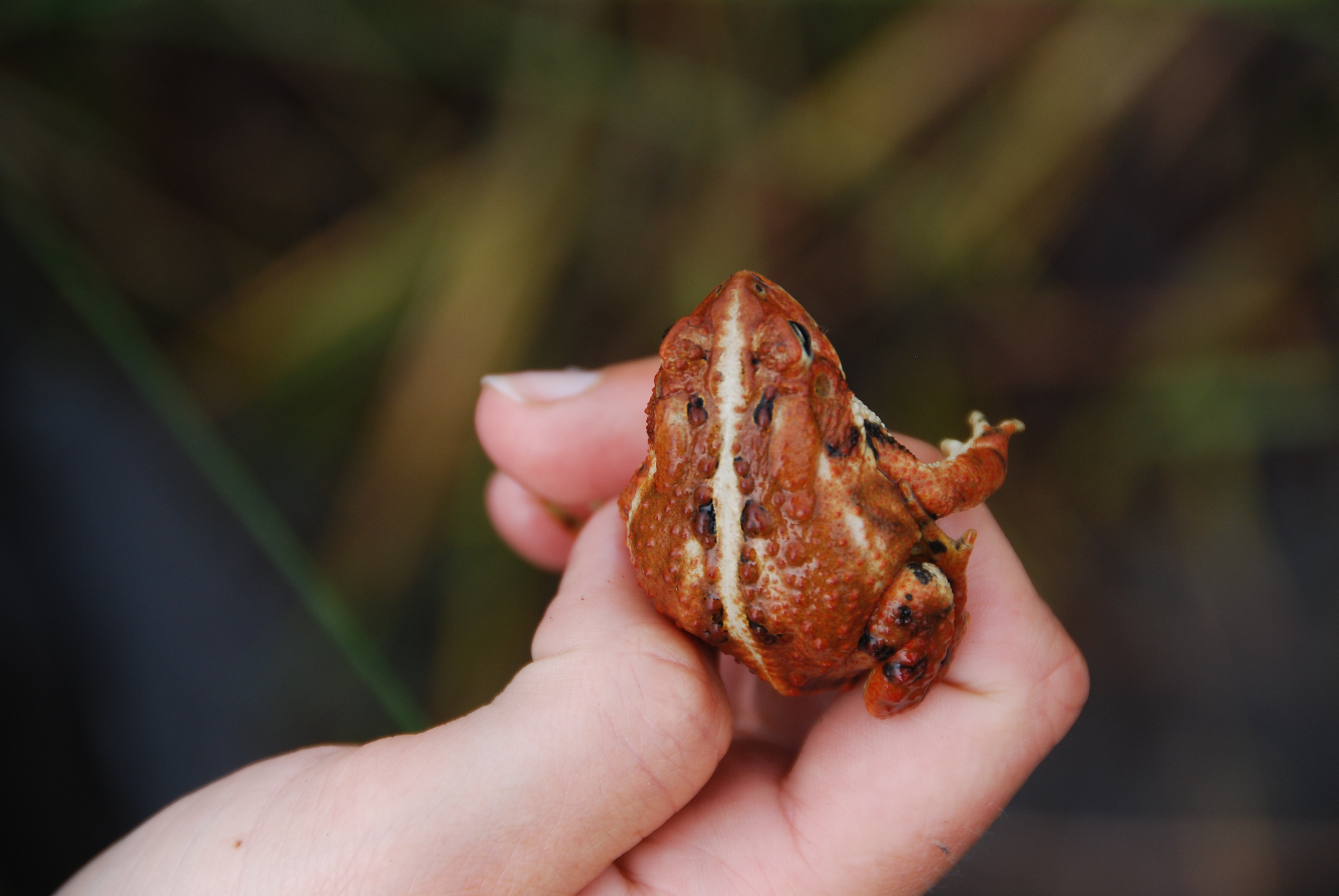
 Hudson Bay toad.

Hudson Bay toad.

What an eye-opening experience: thousands, sometimes tens of thousands of birds, raucous and wheeling, foraging and preening, in a continual parade of avian life. For the first time in my life, I was in a landscape largely unmanaged by humans, and I was astounded by the wealth of wildlife – not just birds, but fish and beluga whales, bears, wolves and caribou, even the very colourful Hudson Bay toad.

When I got back to the farm, it was as if I had new eyes and ears. I compared the dozens or hundreds of bird fluttering and twittering above my fields with the armada of wings I saw in the North. Modest though they are, these small grassland songbirds are reminders of a full and abundant life that exists around us. To lose them – to see the tide of these migratory birds go out, and not return – would be to impoverish the farm, in ways that go well beyond economics.

So I get it. To the extent that I can, I make space for other creatures, including grassland birds. In a future blog post, I’ll expand on the economic payback from birds, and discuss ways Ontario farmers are working to maintain birdsong in their pastures and hayfields. But I have to agree with Herriot: it’s not all about the money, maybe it never should be.

As Herriot said to me in an e-mail: “I still think it is a shame that when you are a farmer who likes the birds or the butterflies, you always need to justify what you are doing in economic terms.”

So economics are important. I couldn’t do what I do without an income. But grass farming can’t be reduced – can’t be simplified – to figures in a ledger.

Welcome to winter

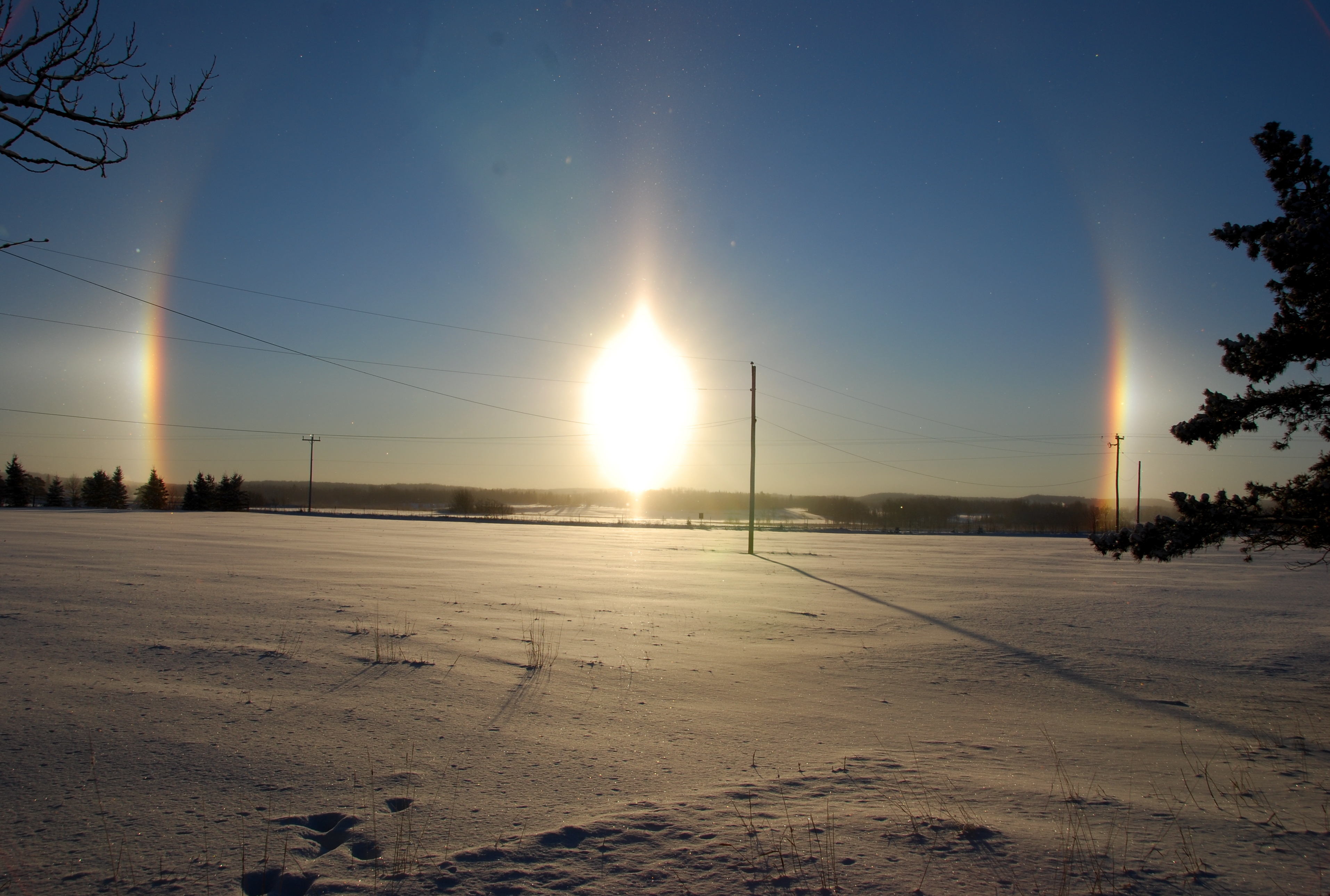
DSC_0728Rain. Snow. Cold. Repeat. The winter of 2015-16 has been nothing if not erratic. Within a week — and sometimes within the same day — the weather veers from spring to autumn, and then back into winter.

But here’s one of the payoffs for living in a winter country: sun dogs. Formed by sunlight being refracting through airborne ice crystals, these puppies seem to be rising, rainbow-like, right off the surface of the snow. (The photo doesn’t quite do them justice.)

In fact, these arcs — also known as “parhelia” — are winter magic, conjured up by sunlight, air and ice. As the sun’s rays slice through the air, they scatter off of tiny, crystalline columns, falling like a continuous shower of ice. The “diamond dust” forms a prism, breaking the sunlight into gorgeous, glittering reds, yellows and mauves. My Nature Company Guide to Weather is a little more matter of fact. “A large number of randomly falling ice crystals is necessary to sustain sun dogs,” it says, failing to note that those same crystals help sustain my spirit, on a cold winter morning.


The snows of Christmas, past and present

Christmas morning, 2007

The temperature climbed to 11 degrees Celsius today (about 52 Fahrenheit), almost double the previous record high from 1957. Balmy temperatures are not totally unwelcome (it’s nice not to worry about the water for the livestock freezing), but for an area with a reliable white Christmas, this still qualifies as freakish. As U.S. environmentalist Bill McKibben once said, this sort of variation from the norm isn’t just off the charts, it’s off the wall that the charts are pinned on.

DSC_0768

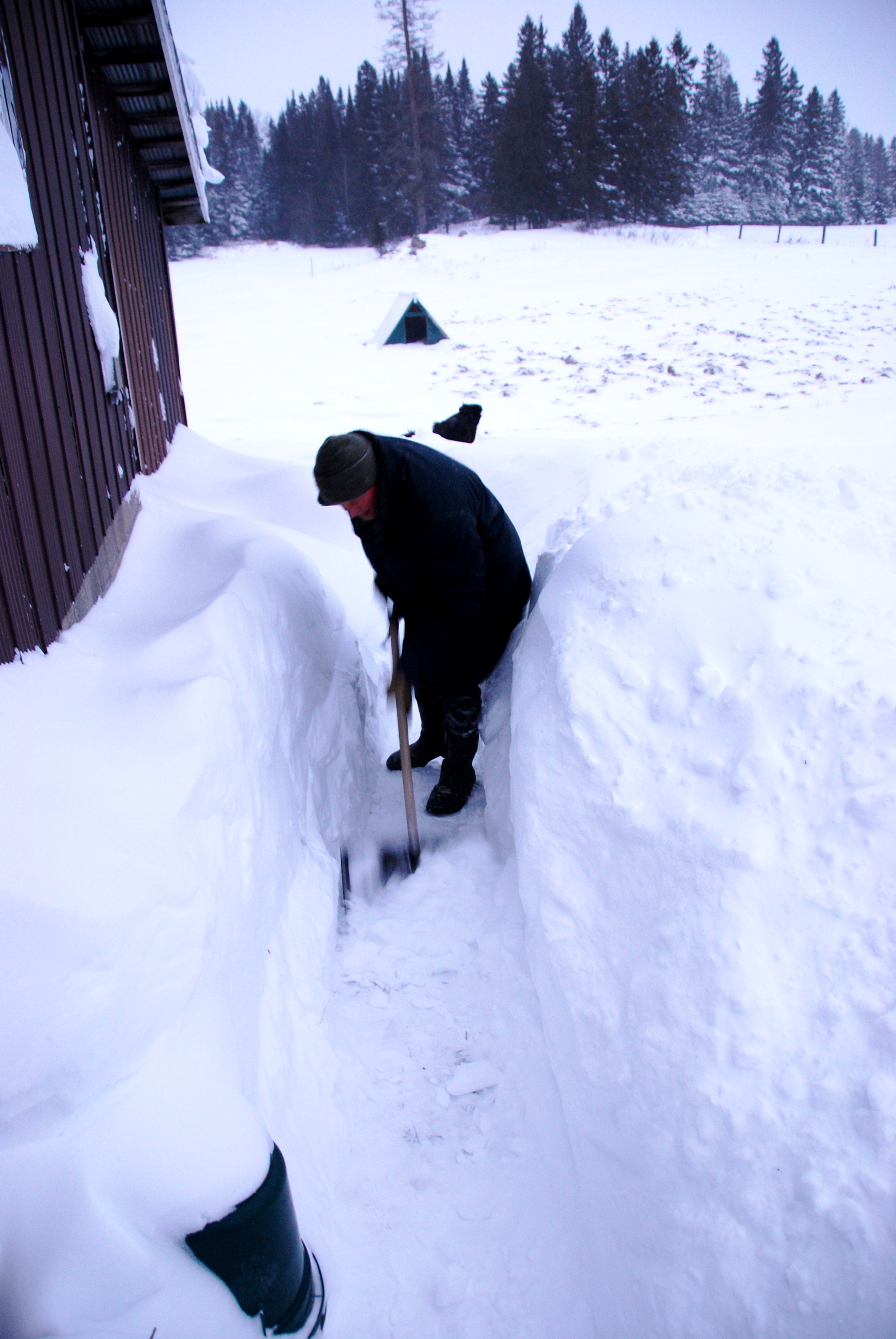
December 14th, 2010. I’m clearing a path around the barn. Lots of insulating snow here!

Golfers are understandably thrilled by the lack of snow, but I can’t help wondering what’s going on in the soil that feeds my grass, and maintains my stock. Snow acts as a blanket, insulating plant roots, animals, insects, and soil-dwelling microbes from the killing cold. It sounds counter-intuitive, but this sort of mild winter, with little or no snow cover, actually leads to colder soils, because there’s less snow to insulate the ground when freeze-up comes.

The trend is already evident in U.S. forests. In 2007 researchers from Pennsylvania State University modelled the impact of changing winters on forest soils, using Wisconsin and Michigan temperatures from 1951-2000, and checking their calculations against real soil temperatures from 39 forested sites in Michigan. Despite warmer air temperatures, mean annual soil temperatures have decreased by as much as a half a degree, Celsius. Meanwhile work in New York State maple stands finds even subtle root damage, caused by deeper frost, inhibits plants’ ability to take up nutrients in the spring. The result is more nutrients flowing into creeks, rivers and lakes with the spring freshet, fueling algal growth, and producing murkier waters. It’s an example of how even modest climate change can have unanticipated impacts.

There’s a lot to learn about the way this sort of winter will affect our fields and forests. I’m already musing about ways to reduce the impact of colder soils and warmer winters — one option, suitable for pastures, is to avoid grazing the grass too short.  A longer residue will trap and hold snow, and the thatch of grass and litter on the surface should offer a little more insulation. While the culprit for this year’s snowless Christmas is a warm-water current in the Pacific known as El Nino, Environment Canada senior climatologist David Phillips says it may be a foretaste of winters to come.  “We notice that our green Christmases are a little more frequent now – that’s climate change,” he told the Globe and Mail.

Whether your Christmas is green or white, I wish you all a wonderful holiday season, and much happiness in 2016.

December 12, 2015. A few of the ewes, dreaming of a green Christmas.

December 12, 2015. This year, even the oldest ewes will see their first green Christmas.