Life along the crane tracks

DSC_0577Long before you see them, you hear their cries: a chorus of high-pitched, rattling “koo-roo”s, as piercing as the “whoop-whoop” of an ambulance siren at a busy intersection. For a minute or two, the cries rise into a crescendo, and then waves of Sandhill Cranes – dozens, sometimes hundreds of ebullient singers – forming ragged, noisy chevrons in the sky.

On the ground, they have the gawkiness of long-limbed teens. But aloft, they’re all grace and elegance. With their long necks outstretched and their wings spanning almost two metres, the cranes are so adept at surfing on air currents that in 2009, researcher Everett Hanna tracked one crane that covered just under 1,000 kilometres in 24 hours during a southbound migration from Manitoulin Island.

If individuals have staying power, so does the species. Based on fossil evidence, scientists reckon the Sandhill Crane has been more or less unchanged for 2.5 million years. By contrast, modern humans – Homo sapiens – have only been pausing to admire the cranes for less than a tenth of that time.

It’s easy to imagine our ancestors being captivated by the sight of dozens, maybe hundreds of cranes. They must have marveled at the size and grace of the birds, and been awestruck by the loud, migrating squadrons. They probably speculated on their culinary qualities, and mused about the best way to get such a large and wary animal out of the air, and onto a roasting spit.

For me, the rattle of the cranes is the soundtrack of spring and autumn. Halford Farm lies astride the crane’s eastern flyway, the flight path for thousands of cranes arriving from Florida each spring, and departing again in the fall. Some of these birds linger in the area, nesting in protected mounds in marshes and along shorelines. Others venture as far north as the shores of Hudson and James Bays.

On a pasture-based operation like mine, the birds forage for insects, green shoots, seeds, even rodents and snakes. I haven’t noticed that they’ve done any great harm, and I like to observe them while we’re both at work in the fields.

Grain farmers may have a different view, though. The big birds can lay waste to newly-emerging crops in the spring. In the autumn, they’ll glean the fields for grain kernels missed in the harvest. The agricultural impact has encouraged some groups to ask for a return of the crane hunt, but in some ways the bird is still recovering from the heavy commercial hunting of the 19th Century. By the time the hunt was outlawed in 1916, so few birds remained that almost all today’s eastern cranes descend from about two dozen ancestors. The result is limited genetic diversity in today’s birds.

Cranes aren’t among the most productive of birds. Most pairs mate for life, sealing their partnership with an awkward, jumping dance. They typically produce a single youngster, or “colt” per year. Years ago when my sons were young and we were waiting for their school bus, the three of us watched a flock of cranes gather to dance in the field across the road. Most birds stood in a circle around the periphery and tried to look casual, while the dancers took turns venturing onto the dance floor to flap and leap and nod. I couldn’t help but think of high school dances, only without all the polyester and Stairway to Heaven.

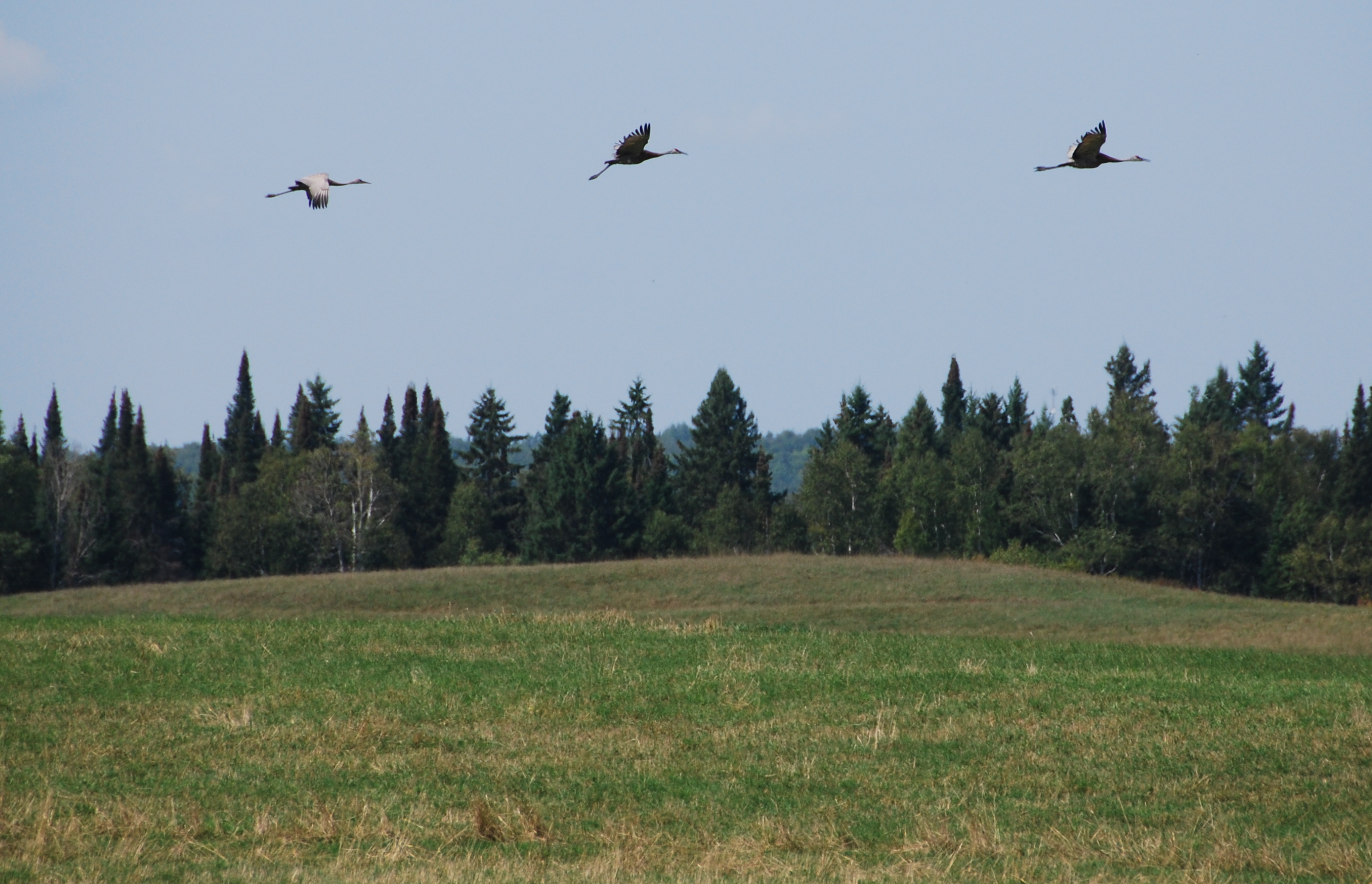
Cranes tend to travel in large tour groups of dozens, sometimes hundreds, but this past September the farm played host to a trio of birds, a nuclear family composed of two parents, and an adolescent colt. Larger flocks came and went, but for most of the month, the trio hung around our farm, becoming increasingly nonchalant as I went past on a tractor or on foot. I carried my camera out for a few days, and finally got close enough for a decent shot.

By early October, they and their compatriots were gone. On a sunny day with strong updrafts, they mount up on rising thermals, making lazy, climbing circles until they’re little more than specks in the azure sky of a sunny autumn day.

Remarkably, you can still hear their cries, long after they’ve become nearly invisible. It’s their swan song – or crane song – for the passing of another season.
The passive-aggressive family makes hay

Summertime, and the livin' is easy...

Summertime, and the livin’ is easy…

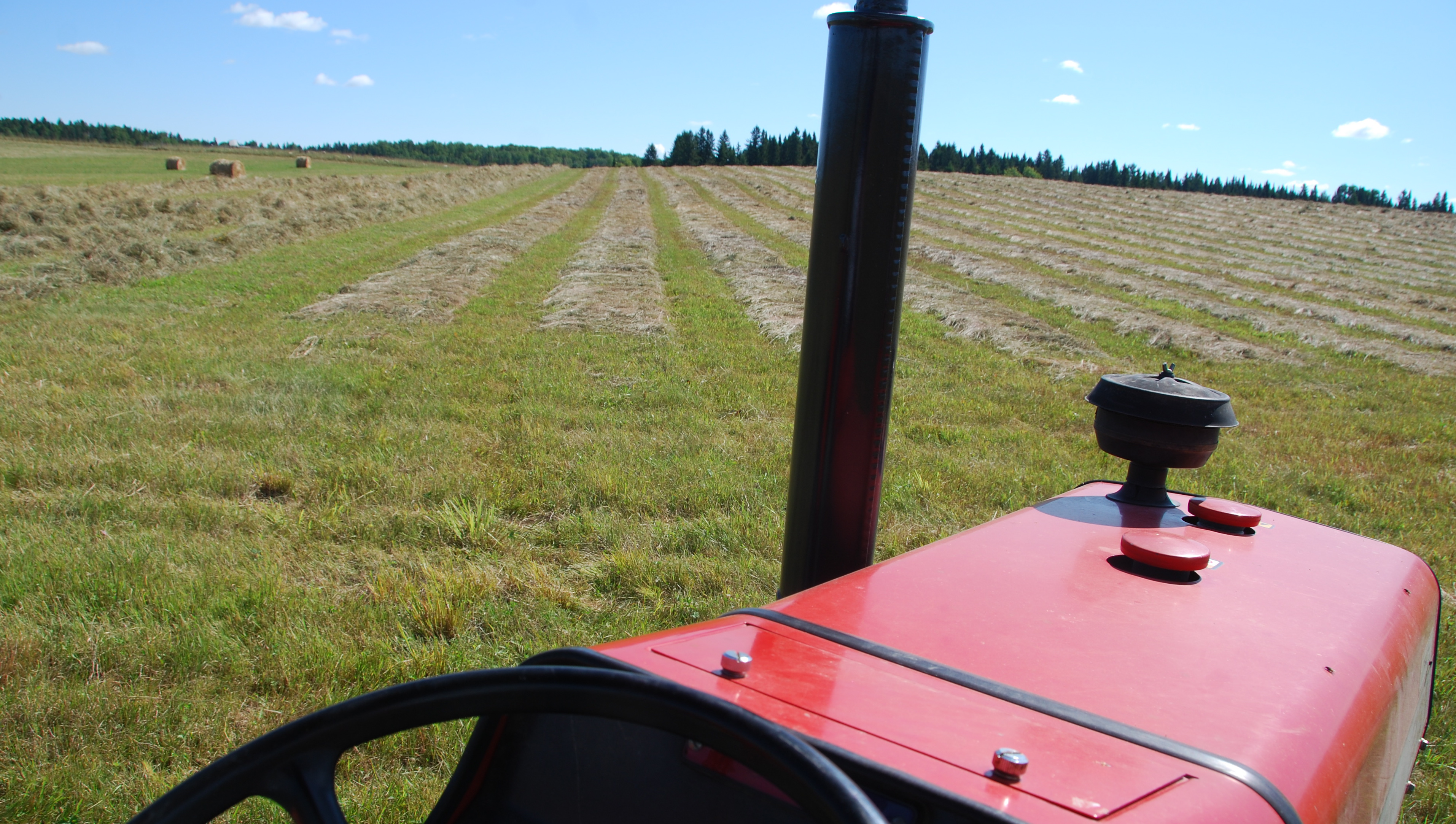
People seem to enjoy doing things that are hard. You can pay someone to help you climb Everest, run marathons, or organize your walking tour of the Camino de Santiago. No doubt those are all fulfilling activities, but our summer is spent in our own exercise in difficulty, humility and exhaustion: attempting to turn green grass into dried hay. To date, no paying customers have offered to join us during this six-week struggle with the weather, mechanical breakdown and family dysfunction we call hay season. Could it be we’re not marketing it very well?

Adapted from a 2013 column I wrote for the Ontario Farmer — the province’s major weekly farm newspaper — here’s all the fun you non-haying types are missing:

For years now, the end of hay season is marked by the sound of my wife, Sue, striking her head on a two by four. I know when she does this, because the impact makes the barn’s tin roof reverberate in a drawn-out tone, like a gong. It’s both pretty, and painful.

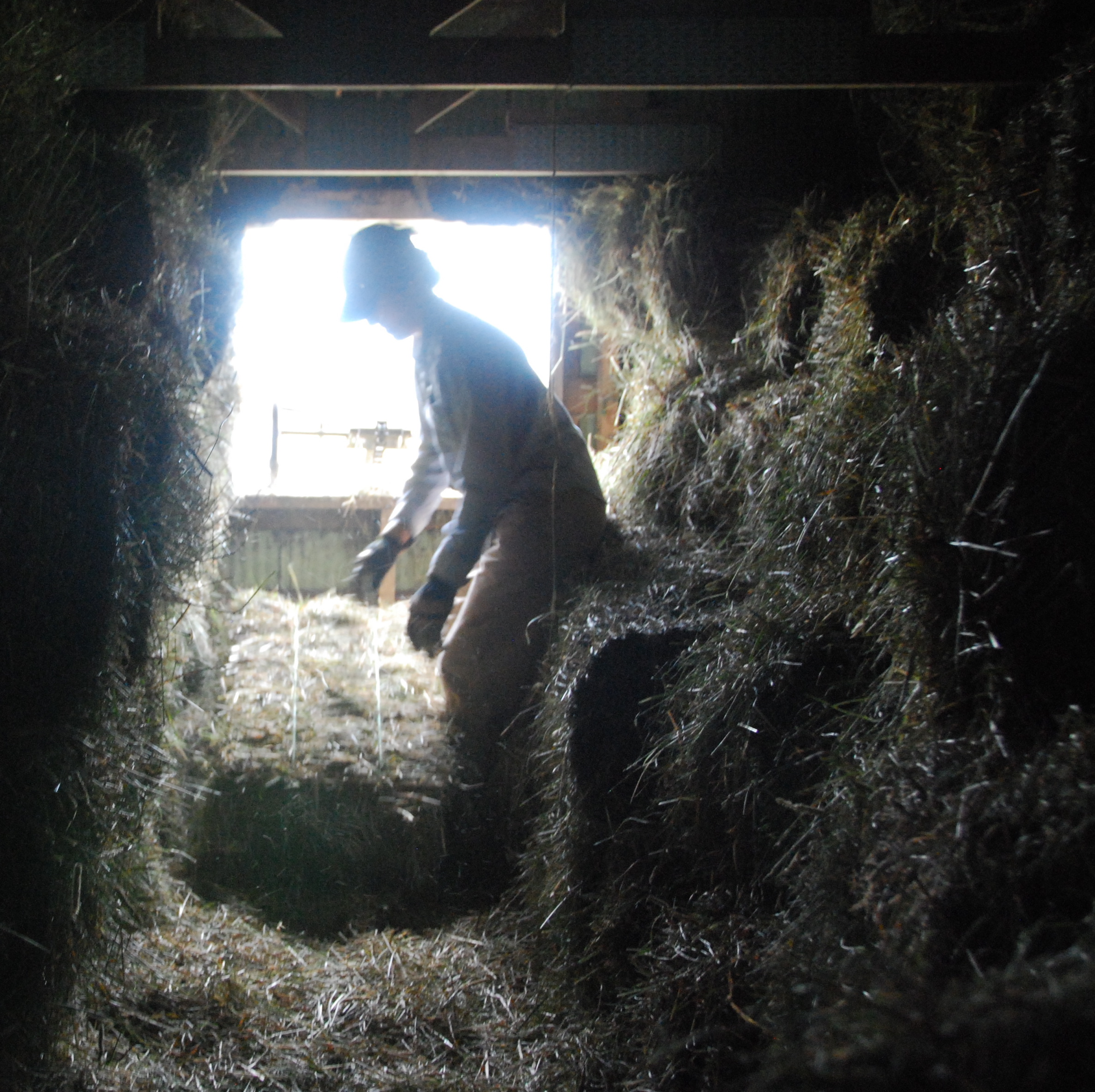
Somewhere, some experimental music type may well be making music with sheet metal and trusses, but this is not Sue’s intent. Instead, she’s wedged among the trusses of the barn, pulling bales off the elevator, and flinging them towards me. I’m near the peak of the roof, jamming the last few bales in place. Like other obsessive farmers, I can’t stand to let prime real estate go unfilled.

Sue, in her traditional role as the handler of small square bales. Note the  trusses overhead.

Sue, in her traditional role as the handler of small square bales. Note the trusses overhead.

It’s a tricky job for the person at the elevator. This is not an old bank barn, with its roof vaulted like a back-concession cathedral. It’s a 1980s steel barn, squat and low, with space for livestock at one end, and hay at the other. In the summer, it heats up like an oven, and there’s a truss every four feet across the roof. Once you’ve stacked eight layers of bales, you have to start ducking beneath the trusses.

Sue doesn’t always duck.When she forgets, I can hear the thump, feel the trusses shudder, and then hear muttered cuss words. “Quit hitting your head!” I shout, helpfully. This advice is never well-received. The next bale is fired at me with more force than necessary.

Outside, our two sons are pulling bales off the wagon and tossing them on the elevator, a sort of conveyor belt for square bales. After years of working for a crusty old farm employer (their dad), they now have the upper hand when it comes to putting hay in the barn. The boys’ pace sets the tempo for the sweating parents on the receiving end of their bales.

So when dad tells them to speed up, bales surge up the elevator in a grassy tsunami. When dad tells them to slow up, the crew swings towards the opposite pole. The flow ceases. Eventually a bale creeps up the elevator. After a long silence, another one drops on the elevator.

Rather than put my family through this fun every year, I’ve tried cutting back on square bales. Instead of stuffing the barn to its absolute limit, we’ve talked about ceasing the operation when the bales reach the trusses, and shifting to making round bales of hay, the kind you can store outside under tarpaulins. I’ve also tried taking Sue’s job. But when the time comes, I can’t resist trying to stuff a few more bales in the barn, even if means crawling around the trusses.

And that’s when it hits me: the same truss Sue has been softening up (without any apparent effect) for years. I curse and rub my tender noggin, and look to my wife for sympathy. She seems remarkably chipper. “Quit hitting your head!” she shouts, firing another bale my way.

They say the family that prays together, stays together. But how does the family that hays together survive the hay season? My only answer is making hay is a little like knocking your head on a rafter: it feels so good when you stop.

Splendour of the grass

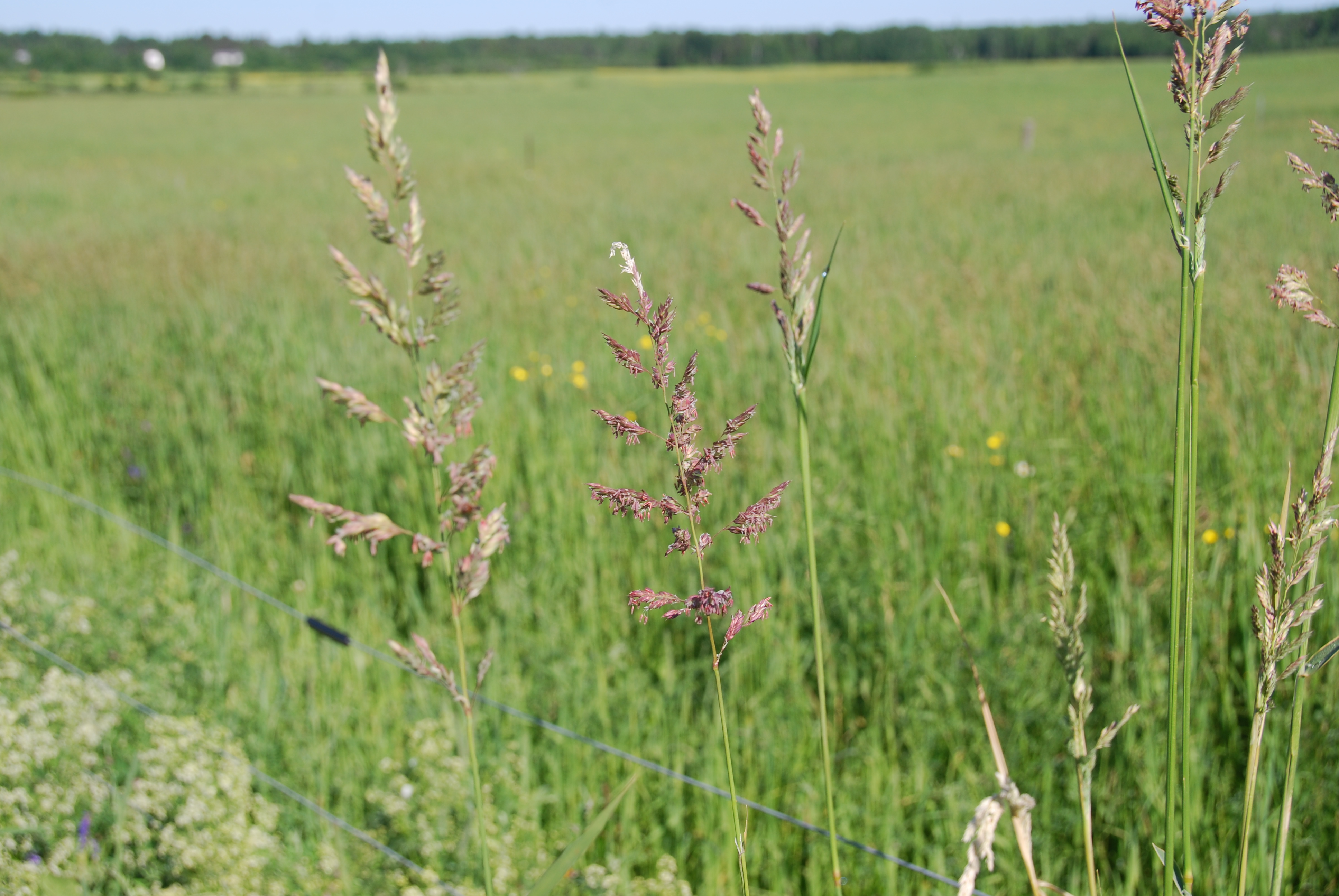
Red canary grass flowers along a fence line.

Red canary grass flowers along a fence line.

Here’s a tribute to the small and inconsequential, and further proof that beauty often lies, overlooked or unnoticed, in everyday places.

“For all flesh is as grass,” Peter wrote in the New Testament, “and all the glory of man as the flower of grass.” The apostle was arguing our human works are ultimately as ephemeral as grass — the plant that “withereth, and the flower thereof falleth away.” (King James Version.)

It’s true that in floral terms, grass is not demonstrative. It typically does not produce eye-catching petals in rich colours, pump out intoxicating scents, or engage in extravagant and continuous flowering. Even before people began manipulating the flowering plants to enhance their aesthetics, flowers had an evolutionary investment in being showy and noticeable, using bright colours and aromatic fragrances to attract the insects and birds that ensured pollination.

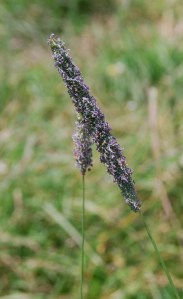
DSC_0479Because the vast majority of grasses are wind-pollinated, they lack this need for dramatic colours and striking aromas. Yet their tiny florets still put on a show, if on a more delicate and ephemeral scale. The cool-season perennial grass, timothy (pictured on the left) blooms on our farm in early July. For just a day or two, the fields of exquisite mauve make a breathtaking sight on misty mornings. (Next year I’ll try to get a photo that does justice to the sight.)
Why don’t you see the same thing on your lawn? Frequent mowing keeps lawn grasses in a green, vegetative state, and helps prevent flowering. Shorter lawn species also feature smaller, more subtle flowering structures, so it’s tough to notice the blooms as you stride to work, or jog through the park. But if you’re lucky enough to pass a field of tall grass, hay, or prairie during your daily routine, keep your eyes open as the grasses “head out” in early summer. It’s a temporary and subtle glory, to be sure, but a glorious sight, nevertheless.

Ladies and gentlemen, please welcome…The Bringers of Disturbance!

DSC_0126

“Hello Cleveland!”

It sounds a great name for a rock band: The Bringers of Disturbance. Just imagine them opening for the Rolling Stones in 1965, a double bill tailor-made to get parents in a lather. (Cue lines such as: “I don’t know what you hear in that racket,” and “You are not going out dressed like that.)

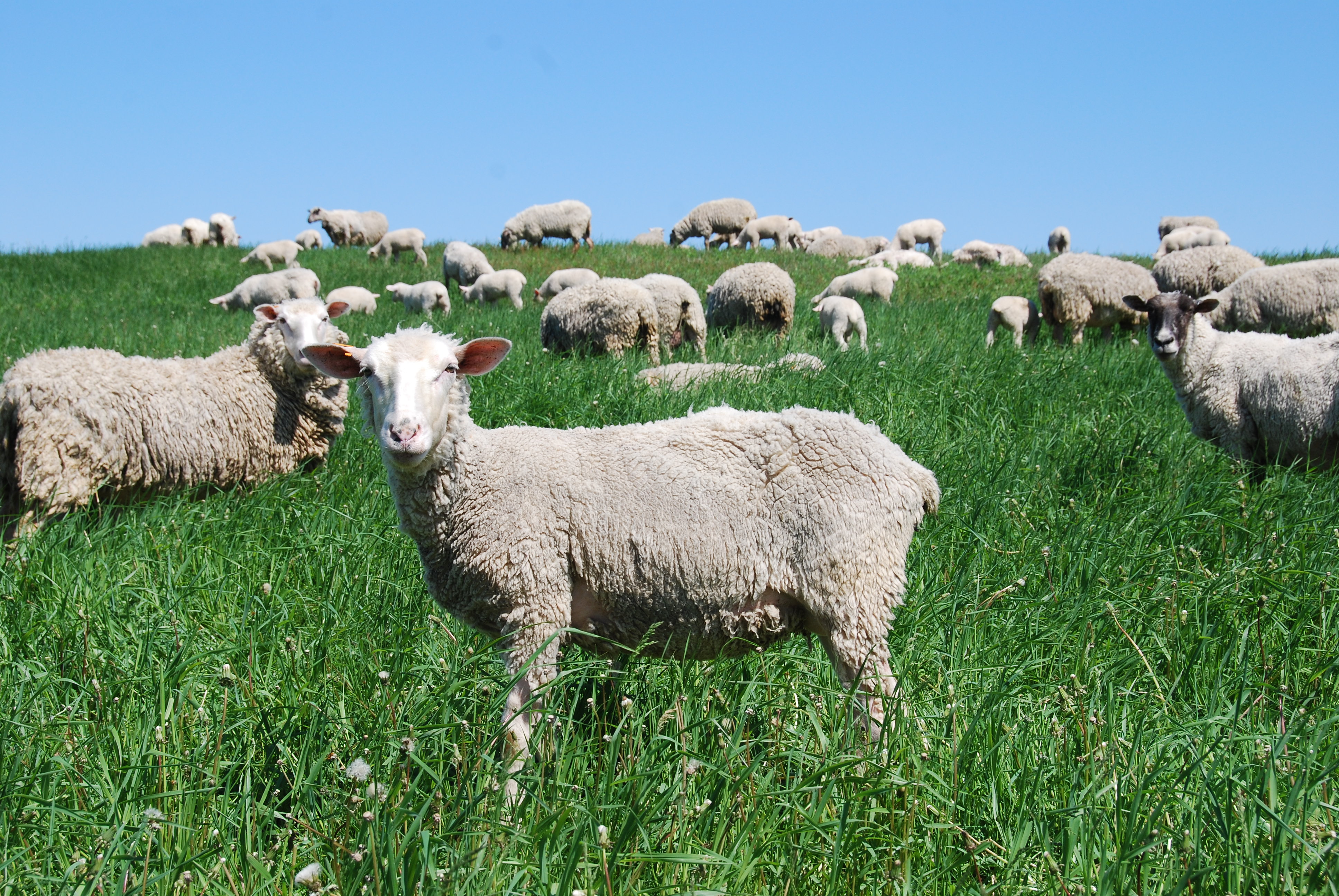
Unfortunately, my Bringers of Disturbance – the four-legged, woolly ones – have yet to achieve classic rock status, and lack the monetary satisfaction enjoyed by Mick Jagger et al. Occasionally emitting a raucous chorus of baas, this placid-looking group tours from May until November or December. They seldom encounter cheering fans, and rarely upset parents.

But on their home turf, they have an impact akin to the Who’s famous 1976 London concert – the one listed in the Guinness Book of World Records of the day as the loudest rock performance ever. That show must have left even sober fans dazed and deafened, and when the sheep leave their stage, the grass looks similarly stunned. Weeds are flattened. Small shrubs or nascent trees are stripped bare.

It may look like carnage, but it’s actually the sort of disturbance grasses need to thrive, maintain their hold on the landscape, and ensure the cycle repeats. Within days, the sward will shake off the effects of the grazers’ performance, and start growing again.

That’s because grass is resilient. If you cut it, burn it, or bite it off, it grows back. Unlike trees and shrubs, grass’s cell factory – the structure that grows new leaves and shoots – is near the soil, tucked away from biting teeth and insulated from heat of fires. Trees, on the other hand, have their “apical meristems” (the production centres for new growth) at the tips of the trunk and branches. These woody plants tend to fare poorly if they’re cut, chewed off, or burned in the sort of high-intensity wildfire grasslands are prone to.

Grasses have evolved both to tolerate these disturbances, and perhaps even to facilitate them as a way to fend off encroaching forests. Dormant grasses provide fuel for the fires that kill competing trees and shrubs. Green, growing grasses draw the grazing animals that trample and browse woody invaders. Animals congregating in grazing areas must have inevitably attracted human hunters. Eventually, those hunters, or their descendents used fire to manipulate the landscape to entice more grazers. At some point, the animals became domesticated as livestock, and many of those grazing areas became fields.

So here I am, a descendent of Neolithic herders turned tour manager for The Bringers of Disturbance. I keep the flock on schedule, field their requests for mineral, water, and M&Ms, and ward off the coyotes that stalk them like paparazzi.

The key is to ensure TBOD don’t wear out their welcome, performing more frequently than the grass can handle. In our grazing system, sheep and cattle are typically moved to a fresh paddock every day. The goal is to have fairly uniform grazing to encourage grass regrowth, while leaving at least a little leaf area on the plants to spur photosynthesis. The sheep also spread manure and urine across the paddock, reducing the need for outside fertilizers. In another four to six weeks, when the grass has recovered, the band plays an encore.

The goal is to mimic a natural grassland system, while harvesting a portion of the meat, milk, or wool it produces. At the same time, the grassland produces other benefits, protecting waterways and preventing erosion, providing wildlife habitat, and even limiting climate change.

It’s a dynamic system, one that thrives on the right amount of disturbance to the right place, at the right time. And while it’s true you can never get everything exactly right in farming, pasturing is all about being consistent: If you can’t achieve excellence everyday, you can at least aim to be good – and if you’re lucky, very good – most days.

Maybe it’s true, as Mick Jagger observed, you can’t always get what you want. But if you try sometimes – okay, all the time – you just might find, your flock gets what it needs.

-30-

The skies are singing

(This post was originally written 11th May, 2015. I heard the first bobolinks six days later.)

Even now, the bobolinks are powering their way north, riding the massive currents of air that well up from the Equator. Each bird is a mere 35 grams of flesh, bone and feathers – the weight of three Oreo cookies – yet wings more than 20,000 kilometres on an annual migration to Argentina. A few, I hope, will return to the fields and pastures around my farm.

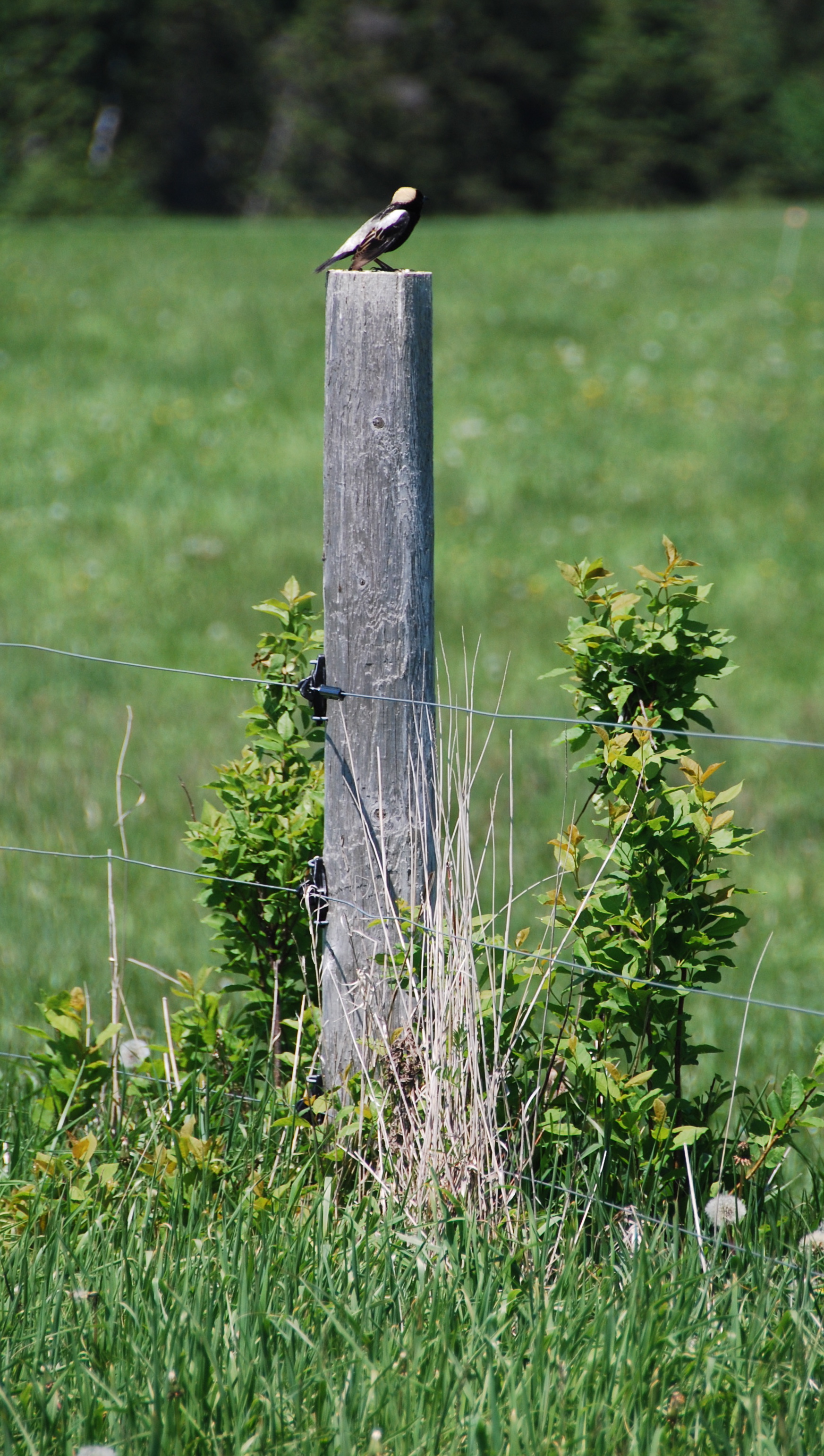
When they settle in, those fields will come alive with birdsong. The males soar and dip overhead, twittering and burbling to entice mates and mark out territory. Once mates are found and nesting sites selected, the males eye me from their perch on fence posts and wires as I trudge out to check the sheep and cattle. They wear a backwards tuxedo – black on the front, cream and white on the back – and sing a sort of avian bebop. Sometimes, I see them clutching a wriggling armyworm in their beaks.

But this summer soundtrack is falling silent, as agricultural grasslands decline in my region of eastern North America, and modern hay-harvesting techniques reduce the number of nestlings that survive into the next migration.

Male bobolink, with distinctive yellow cap and white "backwards tuxedo" markings across his back.

Male bobolink, with distinctive yellow cap and white “backwards tuxedo” markings across his back.

Ontario, my home province, lost about 77 per cent of its bobolinks between 1970 and 2011, and 62 per cent of its Eastern Meadowlarks, according to the province’s Recovery Strategy for the two species. (Ministry of Natural Resources, 2013.) In part, this is due to vast changes taking place on the agricultural landscape. The countryside is undergoing what one old-time cattle farmer called the “cash crop revolution,” a great plough-up that is shifting the landscape from grass and cereal grains towards corn and soybeans. Since the mid-60s, something like 1.5 million acres of hay and pasture land have disappeared from Ontario. That’s a dramatic and inhospitable change for the wild species that live in and around the grasslands, but one likely unnoticed by most people, for whom corn and hay are all just roadside “farm fields.”

Urban sprawl is another part of the problem. My grandmother recalled meadowlarks singing from the fenceposts around her farm in Burlington. Back then you could look across the fields to the limestone spine of the Niagara Escarpment to the northeast, and then south to the sparkling blue of Lake Ontario. Now that farm is covered by homes and streets. It represents a small fraction of the 150,000-plus acres of land paved over in the Toronto area since the mid-1970s.

You won’t find bobolinks around there much any more, just as you won’t find them in land covered by corn or soybeans. These birds are what ornithologists call “obligate” grassland species. That is, they are “obliged” to live on a certain landscape, preferably an extensive grassland that provides cover for nests and insects for dinner, without too many roads and humans, or too many tall trees and the predatory birds that perch in them.

Now, with most of Ontario’s natural grasslands lost, farm fields provide the next best option, and this has some farmers concerned. Both bobolinks and meadowlarks have been listed as “threatened” species, a designation that gives the province the power – so far unused – to regulate key farm activities, including how we cut hay and pasture livestock, in order to protect the birds.

Not surprisingly, the prospect of government intruding into the hayfield gets some worked up. Under the heading “Latest threat to farming – bobolink and biodiversity zealots” a writer in a farm paper branded the bobolink “a plump, mostly black bird that eats too much and can’t sing,” a bird with “an ugly face and a wimpy spiked tail.”

That’s so over the top, I suspect the writer was having a bit of fun. Yet it’s true that many farmers, fearful of the terms of Ontario’s Endangered Species Act, see the bird as a potential nuisance, another costly imposition on farm community.

I think they’ve got that wrong, and I’ll argue the case in a future post. The bobolink is an unacknowledged ally for grass-based livestock farmers, and perhaps their neighbours who grow grain.

Besides, I’d hate to have my workplace deprived of bird song, and lose the natural soundtrack of the fields. Any day now, the skies will fill with song. Let’s hope they never fall silent.