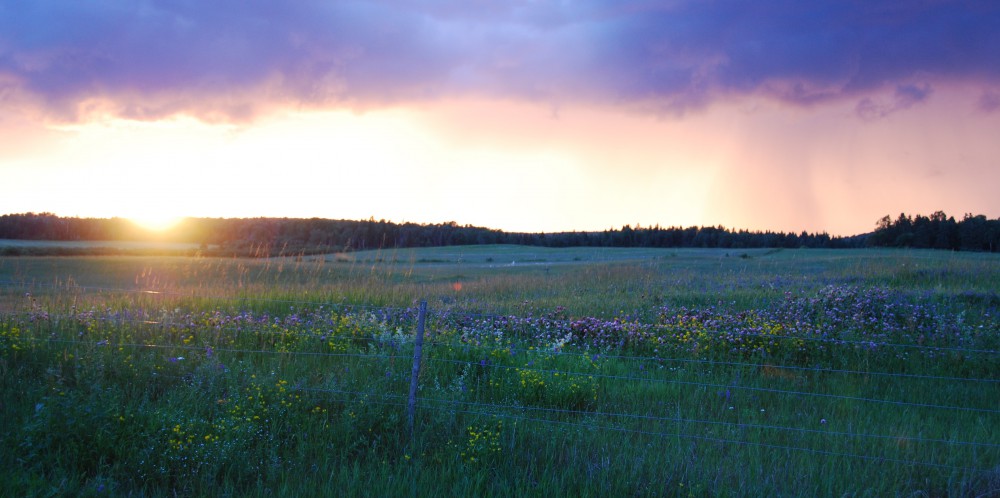
Grass made us. It makes us still.
Your lawn is shaped by mowing. My fields are maintained by diesel and steel. But we’re both products of grasses and grasslands. Our ancestors hunted and foraged on veldt and steppe. They spread fires that transformed forest into savannah and plain. They followed the ebb and flow of grasslands in great migrations, cultivating grasses to fuel and feed the growth of empires.
Now grasses form the foundation of our civilization. Just four species – wheat, rice, corn and sugar – provide more than half the calories for billions of people and their livestock. Grass has both sustained our drive to remake the planet, and been a victim of our success. We’ve ploughed prairies for cropland, and bulldozed meadows for housing, until less than half of earth’s native temperate grasslands remain – a scant four percent of the world’s surface.
I’m part of this process. My ancestors came to Ontario two centuries ago, likely helping convert native savannah (which may have been originally developed by the aboriginal population) to something more like the fields they knew in the northern parts of the United Kingdom. Today, as a farmer, I work in their tradition, with many of the same imported grasses and techniques.
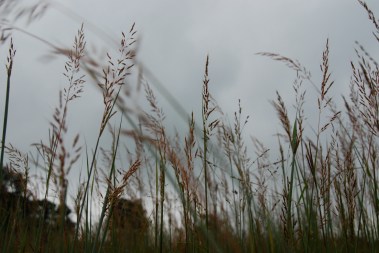
Because grass is bound up in my own business and family history, I’ve become curious about its wider role: the way it supports creatures above and below the soil; the way it has shaped history; the role it plays on the landscape, and its impact on the atmosphere and the oceans. Finally, I’m intrigued by the role grasses and grasslands could play in buffering a changing climate, and repairing a damaged earth, (and if it’s not too late, teach us the value of resilience, co-operation, and even humility in the process.)
These are all aspects of what I’m calling The Grass Project, a series of web postings, magazine stories and newspaper articles (potentially leading to a book or radio documentary) loosely grouped around the entwined story of humans, grasses, and the related species of plants, fungi and animals.
Because I can’t escape my roots, this blog is from the perspective of a pasture-based farmer in northeastern Ontario, and someone who is not a trained botanist or ecologist. It will feature agricultural grasslands and grass-based farming, perhaps more than some readers would like. I apologize for that in advance: when you’re feeding livestock, it’s hard to get away from home. Where and when possible, I’ll talk about or visit other landscapes. But it’s worth noting agricultural grasslands and native meadows share some of the same issues. Both are under threat, not just by farm economics or development, but because they’re underappreciated, ignored, and chronically misunderstood. This is an effort to redress those wrongs.
 Empire of grass